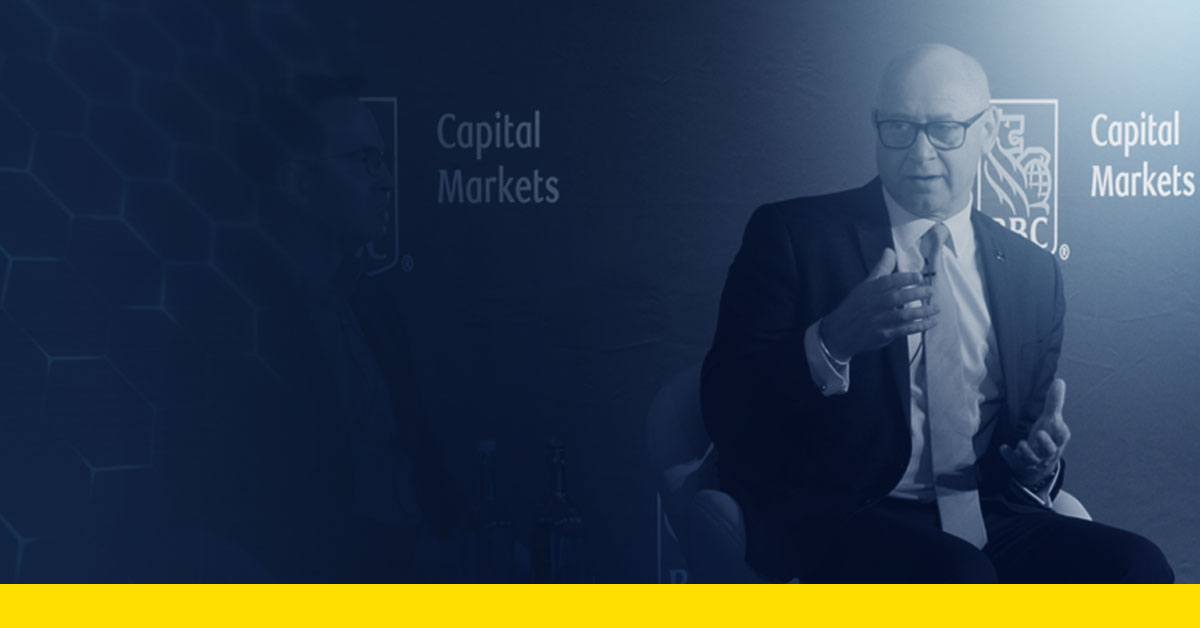

Everyone involved in the global battery value chain is focused on the different ways that governments are encouraging the sectors involved. From the US’ Inflation Reduction Act to Europe’s Rules of Origin and Battery Passports, policies are handing out incentives or threatening tariffs to support the creation of a localized battery value chain that can help them secure future energy supplies. But for experts at the inaugural Global Battery Value Chain Conference, there’s still a lot more to do, particularly in Europe.
Loopholes and toothless directives
Although a lot of new policies and legislation are coming online in Europe, there are still many questions about how they’ll operate. The Rules of Origin require 55% of the inputs into autos to come from within Europe, which will be very difficult for OEMs to demonstrate. Given the complexity, there’s been some chatter of loopholes in the policy.
“Within the processing, you’ve got CAM, PCAM, refining, there’s a lot of steps in the chain. Certainly there may be loopholes involving sending material out of Europe and then bringing it back in after it’s been processed,” said George Heppel, Battery Metals Market Analyst at BASF. “More definition is required on the policy to close that.”
Similarly, the EU’s Critical Raw Materials Act is nonbinding and something that each individual country has to enforce. The EU has said that it will revisit the Act in the next few years if criteria are not being met, but for now, it’s somewhat toothless when it comes to enforcement.
Relaxation of state aid rules, especially when related to the energy transition, is a solid step towards incentives within Europe, but it also stokes intra-European competition instead of being a coordinated response.
“The state aid rules previously had been somewhat of a hindrance... But I think more does need to be done.”
IAIN DUNCAN, PARTNER, SIMMONDS AND SIMMONDS
“The state aid rules previously had been somewhat of a hindrance - having to demonstrate that the projects wouldn't have been possible without the state aid having been granted, which is a fairly high bar. But I think more does need to be done,” said Iain Duncan, Partner at Simmonds and Simmonds.
Missing links in the chain
The pipeline of projects in Europe also indicates some deficits in the battery value chain, according to Heppel.
“There’s plenty of Gigafactories, plenty of people planning on making big vehicles, but there’s very little cathode manufacturing. And who’s surprised? It’s a very difficult business to be in,” he said. “It’s a real concern for the EU going forward, getting enough CAM and PCAM locally made. Right now, it’s just not set up from a legislative or business side of things to actually make any sense.”
“It’s a real concern for the EU going forward, getting enough CAM and PCAM locally made. Right now, it’s just not set up from a legislative or business side of things to actually make any sense.”
GEORGE HEPPEL, BATTERY METALS MARKET ANALYST, BASF
In the UK, there’s also a lot of concern that enough isn’t being done to support the creation of a local battery value chain. Jeremy Wrathall, CEO of Cornish Lithium, said that while his company would love to sell its lithium to UK or European OEMs and battery manufacturers, if the UK’s EV and manufacturing capabilities aren’t there, they’ll sell elsewhere.
“The great thing about the UK is we actually do have the right geology. We also have a longstanding mining culture, there's still huge open pit mining going on in Cornwall for china clay. That sort of goes on under the radar screen, some of those open pits are the size of the Kalgoorlie super pit, they are huge open pits. And we just have that opportunity to do it here. And unfortunately, a government who is actually, most interestingly, in the latest critical raw materials refresh, prioritizing trying to secure material from overseas. That doesn't seem very sensible to me,” he said.
“It’s important to note that no lithium, no cobalt and no nickel equals no batteries equals no EVs. If we don’t have capacity here, we’re really losing out.”
“It’s important to note that no lithium, no cobalt and no nickel equals no batteries equals no EVs. If we don’t have capacity here, we’re really losing out.”
JEREMY WRATHALL, CEO, CORNISH LITHIUM
A passport to investment?
The other key piece of regulation for the European battery and automotive sectors right now is the Battery Passport, which can help OEMs to demonstrate compliance with Rules of Origin, along with other features. The idea is that the passport will allow traceability of raw materials from source to first use in EVs. The passport should then accompany the physical battery throughout its life, from a first life in a vehicle - with battery health data and other data attached to that record - and then potentially into second life remanufacture or into the process of recycling.
“The challenge is of course already explained as you start to understand some of the chemistry of this,” said Douglas Johnson-Poensgen, CEO of Circulor.
“The rock transforms on its journey through various stages of refining and amalgamation with other materials, until it gets used to create a cathode… that is just one constituent part of a battery cell of which lots end up in a module and then in a battery pack.
“[With the battery passport] what you're essentially having to do is follow the material through its industrial pressing steps and that's not easily done just with paperwork.”
DOUGLAS JOHNSON-POENSGEN, CEO, CIRCULOR
It’s very different to food traceability, where clearly a strawberry is a strawberry in the field, and it's still relatively recognizable as a strawberry at the other end of the supply chain… What you're essentially having to do is follow the material through its industrial pressing steps and that's not easily done just with paperwork.”
However, if it does work, it could prove very valuable not only to different stakeholders in the value chain and ultimately to consumers, but also to investors. The EV battery accounts for 50% of inherited Scope 3 carbon emissions and these are roughly 80% of the total carbon emission so making an electric vehicle.
“Make the electric vehicle more sustainably and charge it with sustainable electricity and you actually have a successfulenergy transition. Don't tackle the supply chain challenge and we might as well not bother. And so you know that there is a very tangible benefit there from an ESG investment perspective,” said Johnson-Poensgen.