Sustainable financing is expanding in Europe as nuclear turns green and sustainability strategies and transparency become increasingly important.
Powering Europe into a more sustainable future is going to require significant investment in the next ten years. The International Energy Agency (IEA) has estimated this investment to be circa $4.5 trillion a year by the early 2030s to be in line with a net-zero trajectory by 2050.[1] This investment will contribute to developing renewable energy sources, storage solutions, and further enhancements to national grids.
In Europe specifically, the European Round Table for Industry[2],[3] found that the block’s energy infrastructure needs investment of €800bn by 2030 – the majority focused on electricity – if a successful climate transition is to be achieved.
The grid is the foundation for transition
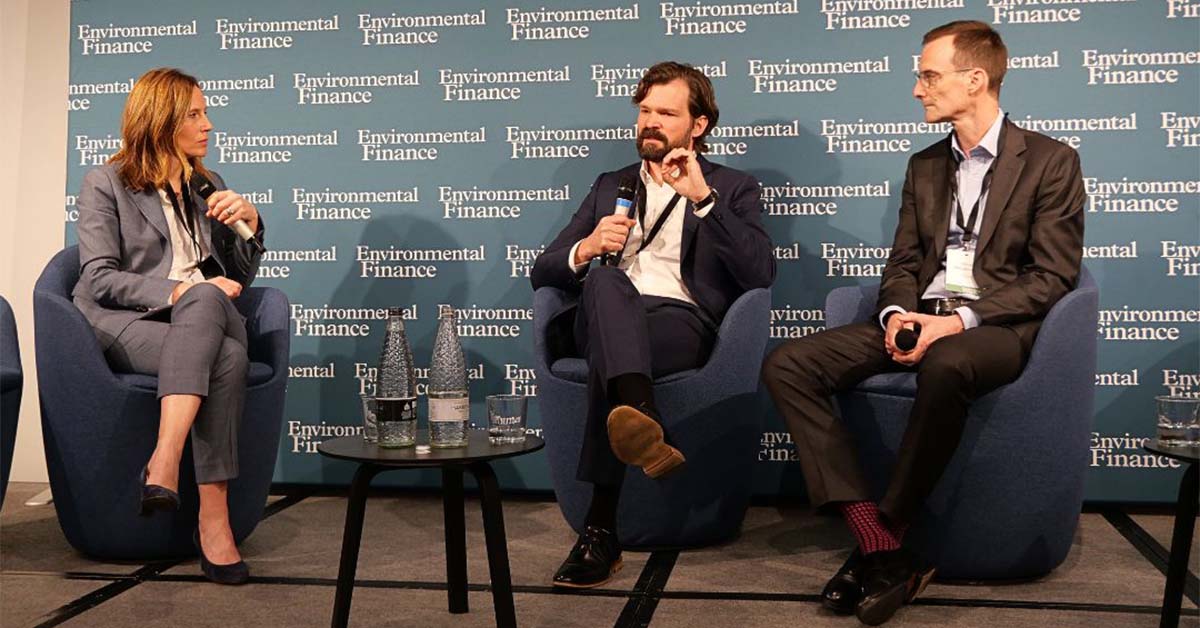
At the Sustainable Debt EMEA 2024 conference in London earlier this year, RBC Capital Markets’ Allison MacKinnon, Head of UK & European Corporate Debt Capital Markets, spoke to Henryk Wuppermann, VP Corporate & Structured Finance at E.ON and Matthew Reed, Head of Development in Sustainable Finance at EDF, about how to finance the transition.
Wuppermann highlighted the scale of the expenditures necessary to upgrade and enhance the grid: “We just upgraded our capex plans from €33 billion to €42 billion euros for the next five years. And to put this into perspective, our market cap is €33 billion or so. So it's quite a big amount. And out of those €42 billion, about €34 billion will go into the grid business,” he said.
E.ON is one of Europe's largest operators of energy networks spanning 1.6million Km and energy infrastructure connecting more than one million renewable energy plants. E.On is also a provider of innovative solutions to 47 million customers.
“Each individual EV charging station in the country, each individual solar PV station, each onshore wind farm needs to be connected to the grid, and that's all connection points which we need to build, and that's where the money goes. In certain places, it’s an enhancement of the grid to make sure that enough power can go through. But more important are actually the new connection points we need to build.”
When thinking about how to finance the energy transition, the first topic which everybody will be looking at is not sources of funding but is going to be debt capacity. Investors will be looking at an issuer’s ability to repay its debt also according to their credit rating. That’s why we have tuned our capex programme to fit our debt capacity, Wupperman said.
To that end, National Grid plc – the UK’s national transmission network in England and Wales - surprised the market in May with a fully underwritten rights issue to raise circa £7bn, citing the critical role of National Grid in “delivering the energy transition across our jurisdictions, by building and maintaining the transmission and distribution infrastructure to enable the connection of cleaner, more affordable renewable energy.”
In their press release dated 23 May 2024, National Grid said: “Not only will this enable the decarbonisation of the economies we serve, it will also ensure we can meet the demand growth we anticipate from a more technology-enabled economy, as well as greater electrification of homes, heating and vehicles.”
The Group also announced £60 billion of capital investment over the next 5-years.
Sustainable finance strategies
Green-labeled bonds have been around since the late 2000s, but there has been some concern from investors more recently that green-labeling doesn’t always align with overall corporate strategy. EDF’s Reed said that it’s the sustainable strategy the bonds are financing that investors want to hear about.
“We’re moving more towards a world where the level of transparency that's required of us, both by regulation and the expectations of our investor base and our financial partners, is going to require us to communicate in such a way that you're going to have a pretty good view as an investor as to whether or not this investment is sustainable or not, regardless of whether it's green-labeled,” he said.
The indicators that investors are looking at are alignment to the EU Taxonomy, and carbon factors, rather than only the label of the bond. Wuppermann agreed, adding that already today, investors are assessing company strategy to ensure their investment aligns with their own sustainability agenda.
The EU’s Corporate Social Responsibility Directive (CSRD) is part of what will introduce this new level of transparency so that investors understand more about what green bonds and sustainability-linked products are financing. Reporting under the CSRD may also help to standardize data around these financial products so that investors can correlate and compare them more easily, said Reed.
New products and new energy sources
One of the surprises when the EU Taxonomy was published was that both gas and nuclear were included as part of sustainable investments. At the time, this was seen as a reflection of the geo-political environment, particularly the war in Ukraine and the effect on energy supply. But it’s also true that Europe has a long history with nuclear power. Nuclear’s inclusion in the EU Taxonomy means that financing for nuclear projects can be labeled sustainable and that’s sparked increased interest in both Europe and the US. Nuclear energy also saw increased attention on the global stage of COP28, where more than 20 countries launched a declaration to triple nuclear energy capacity by 2050, recognizing the key role of nuclear energy in achieving global net-zero GHG emissions.
State-owned Electricité de France, (EDF) is the world’s number one investor and producer in available on demand and constantly available carbon-free electricity with one of the lowest carbon intensities in the world at 37gCO2/kWh (as f 2023), EDF has a generating capacity of over 430 TWh (primarily from nuclear sources) and provides power to approximately 40.5 million customers.
As part of their on-going sustainable financing programme, EDF launched an inaugural senior €1 billion 3.5 year green bond issue in November 2023 dedicated to the financing of the existing nuclear fleet. Reed said the company saw the issuance as a success and pointed out that many others had come to market with their own nuclear green bonds, including in Canada and the US. Orders came in excess of EUR 3.4bn (3.4x oversubscribed). Barclays analysts said in February that dedicated green, social and sustainability (GSS) bond funds held just 0.4% of the nuclear green bond, while in contrast, they held 13% of the €1.25 billion green bond from EDF issued in October 2022 which did not include nuclear.[4]
In March 2024, Constellation Energy issued a $900 million, 30-year green bond to finance “maintenance, expansion and life extensions” of its nuclear reactor fleet and other investments “that reduce or avoid carbon emissions or provide other environmental benefits”.[5] Reed said that although the Euro market is its primary funding source, it watched this issuance with interest because it also seeks funding in the U.S. market. Short-term financing, such as green repos, and the commercial paper market are other sources for EDF, and Reed also keeps an eye on the sustainability-linked bond market and the growth in use-of-proceeds bank financing.
“It's about diversifying types of instruments we use. We also have some sustainability and credit facilities, and continue to grow our green bond program, which we think is definitely additive in terms of raising the capex we need to achieve our goals,” he said.
Even social bonds may become a potential instrument for companies, if they were used to make energy more affordable for consumers. E.ON’s Wuppermann said he could see that possibility if there was another energy supply crisis, but he also pointed out that energy supply itself is not capital intensive.
Financing the energy transition in a “just” way has become the next frontier in recent years to substantiate the need for accelerating renewable energy investments and meeting decarbonisation targets. This shift is so pivotal that COP29, already dubbed the finance COP, is expected to prioritize discussions on establishing global climate finance goals and helping poorer nations in their transition efforts.
[1] https://www.iea.org/reports/net-zero-roadmap-a-global-pathway-to-keep-the-15-0c-goal-in-reach/executive-summary
[2] https://ert.eu/wp-content/uploads/2024/04/ERT-Competitiveness-of-Europes-energy-intensive-industries_March-2024.pdf
[3] https://ert.eu/wp-content/uploads/2024/04/ERT-Strengthening-Europes-energy-infrastructure_March-2024.pdf
[4] https://www.environmental-finance.com/content/news/green-bond-investors-eschew-edf-nuclear-green-bond.html
[5] https://www.businesswire.com/news/home/20240317174584/en