

Technology transfer accelerates gas development
The Australian unconventional gas sector is experiencing a fundamental shift as operators transition from exploration to commercial production, using technology transfer strategies that adapt proven US shale methodologies to local conditions and regulatory requirements.
Tamboran Resources approach to developing the Beetaloo Basin represents a deliberate effort to compress the learning curve that characterized early US shale development, importing both equipment and operational expertise to achieve rapid cost reduction.
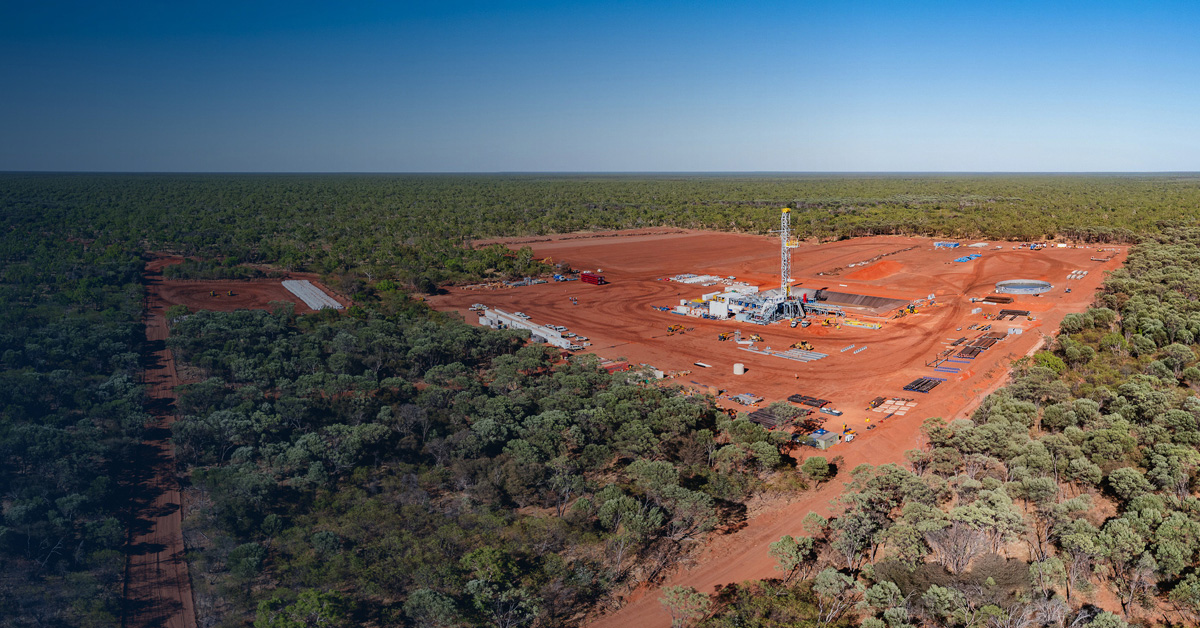
"What we've focused on is bringing in high quality partners from the US," explains Joel Riddle, CEO of Tamboran Resources. "We formed partnerships with Helmerich & Payne to bring in a modern Flex 3 rig. This is the biggest rig operating in Australia today, and it's the first rig imported into the country in 20 years.
The technology gap between Australian and US operations had created inefficiencies that threatened commercial viability. By importing proven equipment and experienced crews, companies can achieve performance on a par with established US basins without the decade-long optimization process.
This approach extends to completion operations, where Tamboran's partnership with Liberty Energy brought a refurbished fracturing spread with US crews, enabling the completion of 10-12 stages per day compared to five stages with conventional methods.
"What we’ve focused on is bringing in high quality partners from the US."
Joel Riddle, CEO, Tamboran Resources
The roads to net zero
Australia's regulatory framework now requires net zero scope one emissions from unconventional gas production, creating both compliance pressures and potential competitive advantages.
"There's new regulation in Australia that requires Tamboran and all the Beetaloo operators to be net zero scope one upon commercial production," Riddle notes. "This is a natural incentive for us to really be focused on how we operate with a very low carbon footprint.
Tamboran's development strategy exploits the Beetaloo Basin's naturally low CO2 content of 3% while modifying operations. The company's electrification strategy uses the Northern Territory’s renewable energy potential including large-scale solar generation being developed nearby.
Carbon capture and storage integration open additional pathways to achieve net zero requirements. Multiple CCS projects near key infrastructure points, including the Moomba hub and Darwin LNG facilities, are enabling strategic carbon management across the value chain.
Partnerships create integrated value chains
Modern unconventional gas development is complex so partnership strategies must go beyond traditional services to take in midstream infrastructure, LNG development, and end-use applications. Tamboran’s ground-breaking partnership approach involves service providers taking equity positions to ensure alignment on long-term development objectives.
"The unique feature of both [H&P and Liberty] deals is that they are also our fourth and fifth largest shareholders," Riddle explains. "They not only provided equipment, but they are aligned on the equity, so we have perfect symmetry around the goal to develop 2 Bcf per day. It's like a 10 – 15-foot putt double breaking on Augusta National."
This integrated approach extends to LNG development through the company's partnership with Bechtel, the world’s most experienced LNG EPC contractor. Bechtel have built the majority of Australia’s LNG Projects, so the partnership allows Tamboran to integrate development from wellhead to export facility, optimizing capital efficiency across the value chain
Emerging technologies expand development horizons
The use of advanced drilling and completion technologies is enabling unconventional operators to extend the scope of development while improving environmental performance. Tamboran's technical development programme focuses on extending current two-mile horizontal wells toward four-mile laterals that could significantly improve capital efficiency.
The intersection of unconventional gas development with data centre power demand is another attractive opportunity for integrated development strategies. The Beetaloo Basin's resources position it favourably for co-located facilities.
I can see a world where we put on 5 gigawatts of data centres in the next 10 years.
"Capital is very mobile. It will flow to where you have great resources and great upside, but also regulatory certainty."
Joel Riddle, CEO, Tamboran Resources
Regulatory certainty drives capital allocation
The Northern Territory's development-focused regulatory approach shows how government policy can accelerate resource development through streamlined approvals and infrastructure planning. Recent regulatory changes include appointment of a Territory Coordinator to speed up approvals and establishment of pipeline corridors to allow midstream development.
"They've recently announced a pipeline corridor that would connect the Beetaloo to Darwin, and that corridor has the potential to fit three 42-inch pipelines," Riddle notes. "The NT government is forward thinking around ensuring we have a regulatory regime to accelerate new pipelines."
First Australia, then the world
Tamboran's phased development approach is targeting domestic energy security before expanding to LNG export markets in the Asia-Pacific region. The company's 40 million cubic feet per day pilot project will supply two-thirds of the Northern Territory gas market, addressing immediate energy security needs while building operational know-how.
The domestic market focus reflects Australia's structural gas shortage on the east coast, where prices at a premium to Henry Hub. LNG development represents the longer-term opportunity, with plans for 24 million tonnes per annum of export capacity through four 6-million-tonne trains.