

Targeting 'affordable to abate' sectors
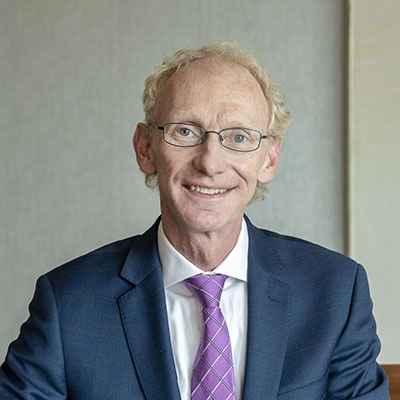
Svante's ambitious go-to-market strategy centres on what Claude Letourneau, President and CEO of Svante, calls "affordable to abate" rather than "hard to abate" sectors. This approach recognizes that CO2 monetization remains the key barrier to rapid deployment, leading the company to prioritize biogenic carbon dioxide removal projects in pulp and paper, ethanol, and waste-to-energy facilities.
The economic logic is compelling: with social costs of carbon estimated at $190 per ton and rising to $300 by 2040, carbon mitigation investments make financial sense when costs remain below these thresholds. The strategy leverages nature working in tandem with engineering solutions to create revenue streams from carbon removal markets.
"The oil and gas industry can afford $25 per ton of CO2 if they have the obligation to store scope three emissions," Letourneau notes. "Service-based companies with small emissions but high profits can afford $100 per ton by sacrificing just 1% of their profit."
This creates a potential $25 billion market at $100 per ton, equivalent to 250 million tons of CO2 deployment annually – a scale that could fundamentally transform industrial emissions.
Breakthrough in solid sorbent technology
Svante's technological innovation centres on the world's first commercial-scale manufacturing of carbon capture filters using solid-state technology. The company has commercialized rapid-kinetic metallic organic framework (MOF) sorbents – what Letourneau calls "magic powder" – developed in partnership with the University of Calgary and BASF.
The breakthrough lies in the integration of multiple innovations: industrialized solid sorbent filters using automated roll-to-roll manufacturing similar to thin-film battery production, coupled with an industrial-scale rotary contactor that continuously captures CO2, releases it pure, and regenerates filters every 60 seconds.
"This is not just a science experiment anymore," Letourneau emphasizes. "It's a blueprint for scaling carbon capture affordably, reliably, and at the pace climate progress demands."
The technology's current sweet spot targets post-combustion flue gas at 12-20% CO2 concentration, found in pulp and paper and cement facilities. However, Svante is developing advanced sorbent materials for lower concentrations, including 3-4% for natural gas power plants and 0.04-1% for direct air capture systems.
"This is a blueprint for scaling carbon capture affordably, reliably and at pace."
Claude Letourneau, President and CEO, Svante
Strategic partnerships drive rapid scaling of manufacturing globally
Svante's recent capital raise – among the largest cleantech financings in North America –funded the construction of its Redwood facility in Vancouver. This "gigafactory" represents a pivotal commercialization moment, with annual capacity to produce filters equivalent to 10 million tons of CO2 capture.
The facility's scale addresses the massive deployment challenge ahead. With global needs estimated at 18 gigatons of CO2 removal annually, and assuming carbon capture addresses 10 gigatons through 10,000 plants of one million tons each, Svante would need 30% market share to deploy 3,000 plants over 30 years—100 plants annually.
"This factory is going to do 10," Letourneau explains. "Eventually we'll have cumulative capacity of about 100 plants a year."
The company forecasts demand will exceed manufacturing capacity by 2030, requiring two to three additional facilities of similar size by 2040 to meet global requirements.
Svante's partnership strategy addresses the three critical components of large-scale deployment: supplier base, channel to market, and customers. BASF serves as strategic supplier for high-volume sorbent material manufacturing, while Samsung provides the global deployment capabilities needed for two plants per week construction rates.
Chevron represents the strategic end-user component, investing in CO2 storage infrastructure while needing to decarbonize its own operations. This integrated approach removes the biggest barriers to rapid industrial carbon capture deployment.
The partnerships enable Svante to operate as original equipment manufacturer while expanding into service-based turnkey facilities and project capital development through its new Devco unit.
“The track record of our network with strategic partners is the winning combination,” says Letourneau. “Build it and they will come.”
Letourneau's five-year target: deploying 15 million tons of cumulative capacity through 15 plants of one million tons each by 2030. Success would position Svante as the first call for customers designing carbon capture plants, supported by carbon intensity labelling that makes emissions transparency as standard as nutritional information on food products.
"The track record of our network with strategic partners is the winning combination. Build it and they will come."
Claude Letourneau, President and CEO, Svante
Industry tailwinds create deployment clarity
The carbon capture industry is experiencing a fundamental shift from uncertainty to opportunity. After years of policy headwinds and capital cost escalation, recent developments are accelerating real deployment prospects across North America and Europe.
In Canada, the implementation of investment tax credits equivalent to 50% capital grants, combined with the Canada Growth Fund's long-term CO2 offtake agreements, is creating the financial foundation for large-scale projects. The inclusion of carbon capture in Canada's sustainable energy narrative represents a strategic pivot that positions the technology as essential infrastructure rather than experimental add-on.
Meanwhile, recent US legislation has preserved and enhanced the 45Q tax credit, now providing $85 per ton for both industrial and power facilities – a $20 improvement for reuse projects. Major oil and gas players are also securing large-scale CO2 storage capacity in the US Gulf Coast, creating the downstream infrastructure needed for widespread deployment.
Letourneau sees these policy shifts as the providing the certainty the industry needed. "The carbon management industry was facing significant headwinds mainly due to political uncertainties about long-term climate policy stability," he explains. "Now we have clarity."