

The quest for returns in carbon management
“Today the problem is not cracking the code of technology – it’s about cracking the code of monetization.”
Claude Letourneau of Svante is summing up the challenges faced by several leaders featured in RBC’s Climate Week CEO summit. Having achieved technological breakthroughs, they are now engaged at different stages of the battles for commercialization and growth.
In Svante’s case, the breakthrough takes the form of an alternative to liquid amines in the carbon capture process. The company spent $600m developing a solid-state approach, which removes the emissions associated with the traditional method.
To commercialize its tech, Svante has split into three business units. The first is a manufacturing plant to produce its carbon filters; the second offers turnkey carbon capture solutions; and the third is a project development business, in which Svante shares equity risk with clients.
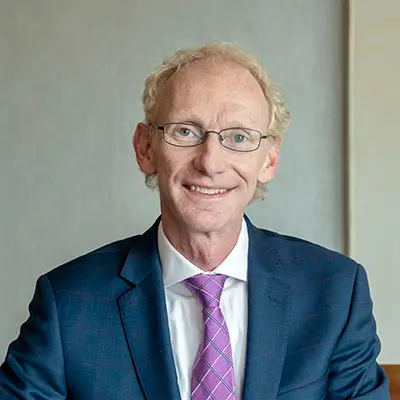
“By the time we are cashflow positive in 2030, we will have spent $1bn,” Letourneau says. “That’s what it takes to move the needle.”
“By the time we are cashflow positive in 2030, we will have spent $1bn – that’s what it takes to move the needle.”
Claude Letourneau, President & CEO, Svante
Bringing tech to waste services
For waste services business Roadrunner, the biggest growth challenge was explaining its offering to investors.
The company’s platform offers waste and recycling management services enhanced by AI. Its cameras provide clients with insight on the ‘black boxes’ of their dumpsters – reporting real-time fill rates, as well as sounding an alert where a recycling truck has been contaminated.
“We operate in environmental services, but we are a tech business,” says CEO and founder Graham Rihn. “Where we’ve had trouble over the years is finding investors that want to spend enough time to understand why Roadrunners is a hybrid of both. Once they get there, they totally get it.”
The company has focused chiefly on organic growth, though its acquisition of smart metering tech firm Compology was a “transformational” deal. Roadrunner is now open to buying further tech products, as well as acquiring legacy waste players to extend their capabilities.
“We are grounded by our unit economics,” Rihn says. “The arbitrage way is not as efficient as growing organically. But more recently, with profitability cash, we can start coming up with a different vertical of growth.”
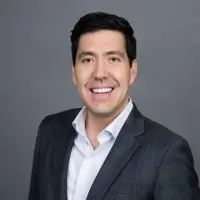
“With profitability cash, we can start coming up with a different vertical of growth.”
Graham Rihn, Founder & CEO, Roadrunner
AI generates demand – and new discoveries
In its early days, Zanskar Geothermal also struggled to raise capital. “Geothermal was not on most investment groups’ radars – that has changed even in the last 12 months,” says CEO Carl Hoiland. The other issue was finding energy demand – no longer a limitation since the rise of power-hungry AI. And Zanskar itself has deployed AI to overturn assumptions about the resource base for geothermal. While much of the sector is focusing on stimulating rocks to create artificial reservoirs, Hoiland says his company is using AI to prove that conventional wells have many more geothermal resources than traditional mapping had revealed.
“In just the last three years, we’ve discovered more new hidden geothermal systems than the entire industry had done over the prior 30 years,” he says. “We’ve not just found new sites: we’ve gone to existing sites and shown that they can be much more productive.”
Having used venture capital to build its technology, Zanskar is now looking to bring in more diversified investment for projects. “It’s been important to us from the beginning to think about knowing that investors are going to be aligned on both sides of that, and thinking about that handoff and transition,” Hoiland says.
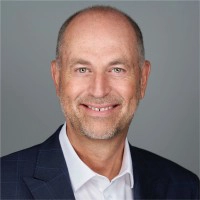
“We’ve not just found new sites: we’ve gone to existing sites and shown that they can be much more productive.”
Carl Hoiland, PhD, Co-Founder & CEO, Zanskar
A mission to upgrade transmission
With a second large-scale manufacturing site under way, TS Conductor is advancing its growth plans – and its aim to dominate the electricity transmission industry. CEO Dr Jason Huang set out to tackle one of the causes of energy grid bottlenecks: the continuing use of an inefficient, century-old technology in transmission lines. His solution uses a carbon composite core, protected by aluminum encapsulation. In combination they provide strength, low weight and high conductivity.
With its existing plant in California reaching capacity, TS Conductor is now set to expand production through a second facility in South Carolina. The company will also focus on international growth over the coming year.
Continuing the development of the company from start-up to growth business is Huang’s priority: “It takes tremendous effort in terms of the team that you have, the company culture you need to evolve, and the ability, ultimately, to execute your ambitious expansion plan.”
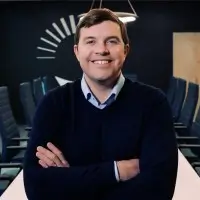
“It takes tremendous effort in terms of the team that you have, the company culture you need to evolve, and the ability, ultimately, to execute your ambitious expansion plan”
Jason Huang, PhD, Co-Founder & CEO, TS Conductor