WSP’s ambition is boundless. Its latest three-year strategic plan sets out its aims to grow key markets, accelerate innovation and increase net revenues by 40%. The firm’s ultimate vision is to double the size of the business.1
This ambition follows an already-rapid expansion from the company’s beginnings in Québec in 1993.2 Today WSP has 75,000 employees in 50 countries around the world, delivering projects across transport, infrastructure, and energy, among other sectors.
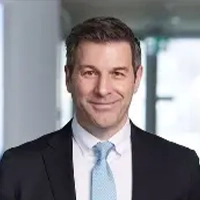
President and CEO Alexandre L’Heureux believes WSP’s uniquely diversified platform offers the perfect positioning to embrace the megatrends fueling its industry: rapid urban growth, ageing infrastructure, and the demand for smart, sustainable cities.
Three drivers of innovation
Across its diverse portfolio, WSP deploys a bespoke model to ensure constant innovation. It is built on three pillars, L’Heureux explains, starting with its ‘future-ready’ framework.
“This global program challenges teams to design with the future in mind, anticipating trends in climate, society, technology, and resources,” he says. “It also ensures that innovation is not just reactive, but embedded in every project life cycle.”
Digital transformation is the second pillar. WSP uses AI, machine learning and digital twins to cut risk and enhance decision-making. L’Heureux points to the Microsoft-powered platform now digitizing environmental impact assessments and cutting proposal preparation time.
The final pillar is the sharing of cross-sectoral knowledge. The company places a high value on its ability to transfer insight across professional boundaries, an advantage strengthened by its 2024 acquisition of U.S. consulting firm POWER Engineers.
“Our global program challenges teams to design with the future in mind, anticipating trends in climate, society, technology, and resources.”
Alexandre L’Heureux, President and CEO, WSP
Organic expansion, targeted acquisition
In fact, WSP has completed more than 90 acquisitions since L’Heureux joined in 2010 as Chief Financial Officer.3 As he points out, that has been balanced with organic expansion.
“Our organic growth is closely tied to our acquisition growth, through the revenue synergies that we deliver when we complete an acquisition,” he adds.
Three stakeholders remain top of mind as the company grows: “We want to be perceived as the preferred home to engineers, advisors and scientists. We want to be a transformative partner for clients – to be seen as an extension of our clients’ teams. And we want to be a shareholder value creator, through sustainable growth and strong capital allocation.”
“Our organic growth is closely tied to our acquisition growth, through the revenue synergies that we deliver.”
Alexandre L’Heureux, President and CEO, WSP
A champion of company culture
Despite a long track record – he was previously a Partner and Chief Financial Officer at Auven Therapeutics4 – L’Heureux approaches each new challenge afresh.
“Every time I have a new earnings call, I feel like it’s the first one. I don’t take anything for granted,” he declares.
A similar aversion to complacency drives his approach to culture. L’Heureux sees cultural drift as a feature of failing companies. He regards his key role as being the standard-bearer for the way WSP works, maintaining a line back to the company’s roots.
“My most important priority as a CEO is to hold the flag on culture,” he says. “It’s a culture that is very entrepreneurial, very agile, very adaptable.”
“We don’t wait to have everything perfect before we move, and we’re not afraid to take informed risk. The day you start being defensive as a company is when you start going backward.”
“My most important priority as a CEO is to hold the flag on culture.”
Alexandre L’Heureux, President and CEO, WSP