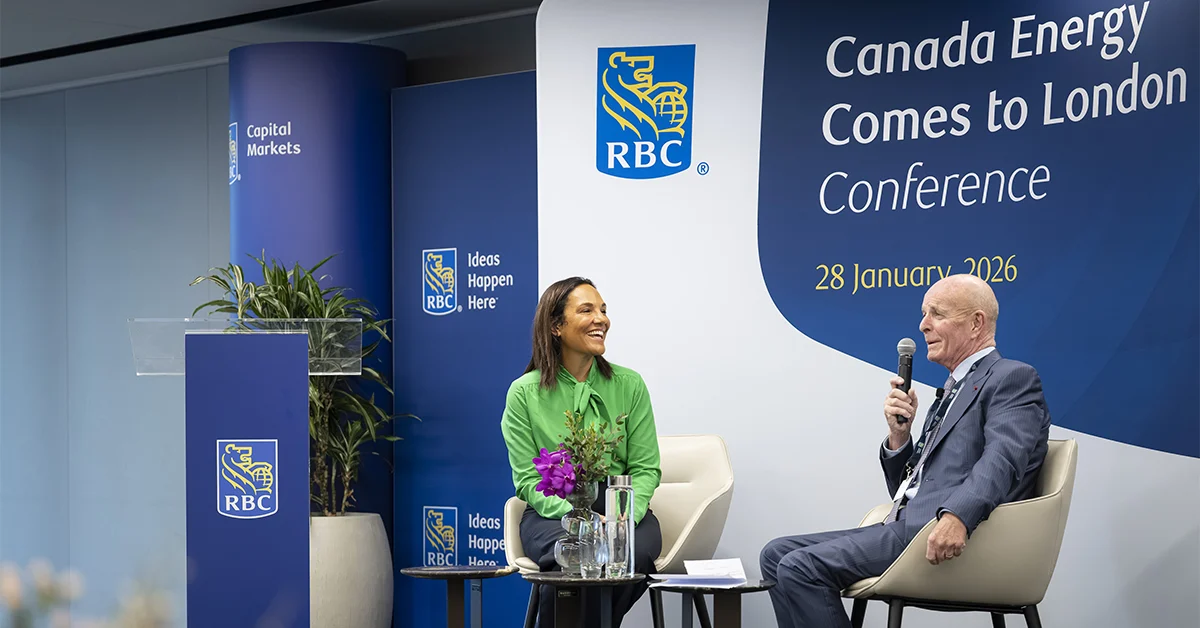
The global energy sector faces unprecedented complexity as geopolitical tensions reshape investment and operational priorities. At our recent Canada Energy Conference, former British intelligence chief, Sir John Scarlett, highlighted five critical considerations that energy professionals must navigate.
NATO realignment and European defense spending
The transatlantic alliance faces fundamental questions about its future as traditional security assumptions unravel. Scarlett emphasizes that European strategic autonomy now demands serious consideration. This shift carries substantial implications for energy infrastructure and supply chains across Europe. Energy companies must anticipate increased European defense investments, which will reshape budget priorities and regulatory environments. The uncertainty surrounding NATO's evolution means energy investors should assume increased volatility and prepare contingency plans for fragmented European security arrangements.
“It's now almost four years since the invasion, but we're no closer to a credible, long lasting peace settlement in Ukraine. So we have to think about what that means for the sectors in which we work.”
- Sir John Scarlett, Former Chief of the British Secret Intelligence Service
Russia's diminishing regional influence
Russia's position in the Middle East has arguably weakened, particularly following Syria's recent geopolitical reorientation. This represents a strategic setback for Moscow, whose energy sector remains fundamentally dependent on export revenues and regional relationships. The loss of influence undermines Russia's ability to shape regional energy politics and maintain strategic partnerships. For global energy markets, this could suggest reduced Russian leverage in Middle Eastern affairs, potentially creating space for alternative partnerships and investment opportunities—though it also signals broader Russian economic vulnerability that could affect commodity pricing strategies.
The Ukraine conflict as a persistent security factor
Nearly four years into the invasion, no credible pathway to a lasting peace settlement exists, meaning the conflict will likely continue shaping energy markets. Hybrid warfare, rather than direct military engagement, increasingly characterizes Russia-NATO tensions. Energy infrastructure remains vulnerable to these evolving conflict tactics. Companies operating across Eastern Europe and the Baltic regions must recognize that this situation represents a structural, not temporary, security challenge. Long-term planning must account for sustained tensions and the hybrid threats—cyberattacks, supply chain disruptions, and infrastructure vulnerabilities—that characterize modern conflict.
“Canada is opening up its options and looking broadly across the world, including the Middle East and China. The mere fact that we're talking about a move away or building up gaps between the US and Canada is a massive change.”
- Sir John Scarlett, Former Chief of the British Secret Intelligence Service
Divergent US-Israeli objectives in Iran
While both Washington and Tel Aviv oppose the Iranian regime, their strategic objectives are likely to differ markedly. Where Israel may seek a comprehensive regime change, the US is likely to prioritize solutions which avoid regional disruption and economic consequences. This policy divergence creates unpredictability for energy markets already sensitive to Middle Eastern stability. The presence of US naval assets near Iranian waters, combined with regional states' nervous positioning, suggests energy infrastructure across the Gulf faces heightened risk. Energy companies must monitor US policy developments closely and prepare for scenarios ranging from tactical strikes to broader military engagement, each carrying vastly different implications for regional oil production and shipping routes.
Canada's evolving geopolitical role and energy positioning
Canada's growing openness to diversifying international relationships—moving beyond traditional US alignment—creates new energy partnership opportunities. Mark Carney's recent messaging signals Canadian interest in engaging more broadly with European and Middle Eastern partners. For the energy sector, this suggests Canada may increase its role as a stable, alternative energy supplier to diversified markets. However, this repositioning also reflects broader strain in the US-Canada relationship, introducing uncertainty into traditionally predictable North American energy dynamics. Energy companies should anticipate increased Canadian interest in European market access and LNG expansion, with corresponding policy and regulatory shifts.