
Diplomatic talks between Washington and Tehran ended once again with constructive soundbites but no breakthrough on the fundamental issue of Iranian domestic uranium enrichment. Despite negotiating flexibility on highly enriched materials stockpiles, Iran shows no willingness to fully dismantle the Natanz and Fordow enrichment facilities or the Isfahan reactor. The key variable to avoiding military conflict now is whether President Trump will accept an enhanced version of the 2015 Joint Comprehensive Plan of Action (JCPOA) agreement.
The military buildup itself may become a driver of escalation. The United States has deployed more military assets to the Middle East than at any point since 2003, and Washington has never stood down from such a large deployment. While this massive show of force may represent ultimate brinkmanship aimed at forcing Iranian concessions, it risks a scenario in which the sheer presence of military capabilities generates unstoppable momentum toward their use.
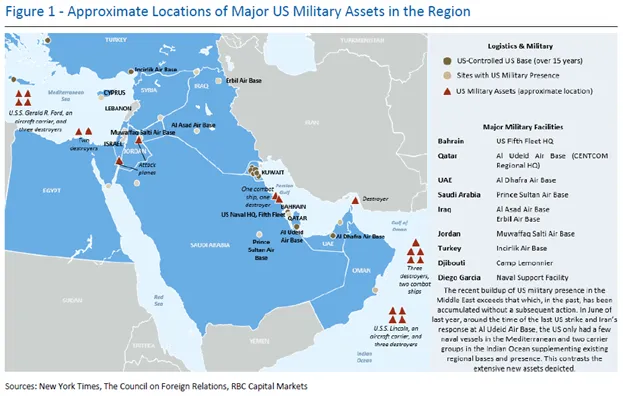
The Trump administration faces internal divisions over military options. The America First Wing views another Middle East conflict as counterproductive to national interests, while a significant congressional faction continues pushing for military strikes aimed at regime change. These Iran hawks on Capitol Hill could effectively block any sanctions relief package if Trump pursues a "JCPOA+" deal.
Congressional constraints limit executive flexibility even if a nuclear agreement is reached. The Iran Nuclear Agreement Review Act of 2015 requires Congress to vote on any White House agreement before sanctions can be waived. Unlike Venezuela and Russia sanctions, there is no straightforward mechanism for the Executive Branch to repeal congressional measures without legislative approval, though the White House retains some enforcement discretion. The Biden administration's inability to fully vacate these restrictions ultimately derailed nuclear deal negotiations in 2022.
“The presence of such substantial military assets creates an inexorable momentum to use them.”
Helima Croft, Head of Global Commodity Strategy and MENA Research, RBC Capital Markets
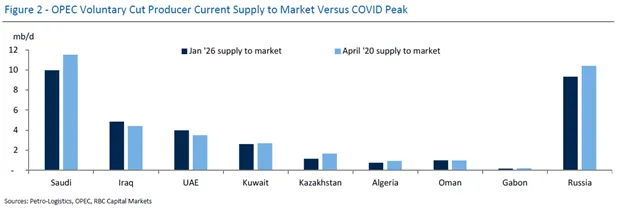
Energy markets face upstream constraints from geopolitical uncertainty. There may be a path for OPEC to resume a gradual wind-down of voluntary production cuts. However, actual volumes reaching the market will likely fall short of any announced increases given sparse spare capacity outside Saudi Arabia. Bringing limited capacity online now would leave minimal spare barrels to cushion against regional supply disruptions should Iran nuclear tensions escalate into wider conflict.
Helima Croft authored “Iran Update: Zero Sum Scenario,” published on February 26, 2026. For more information on the full report, please contact your RBC representative.
