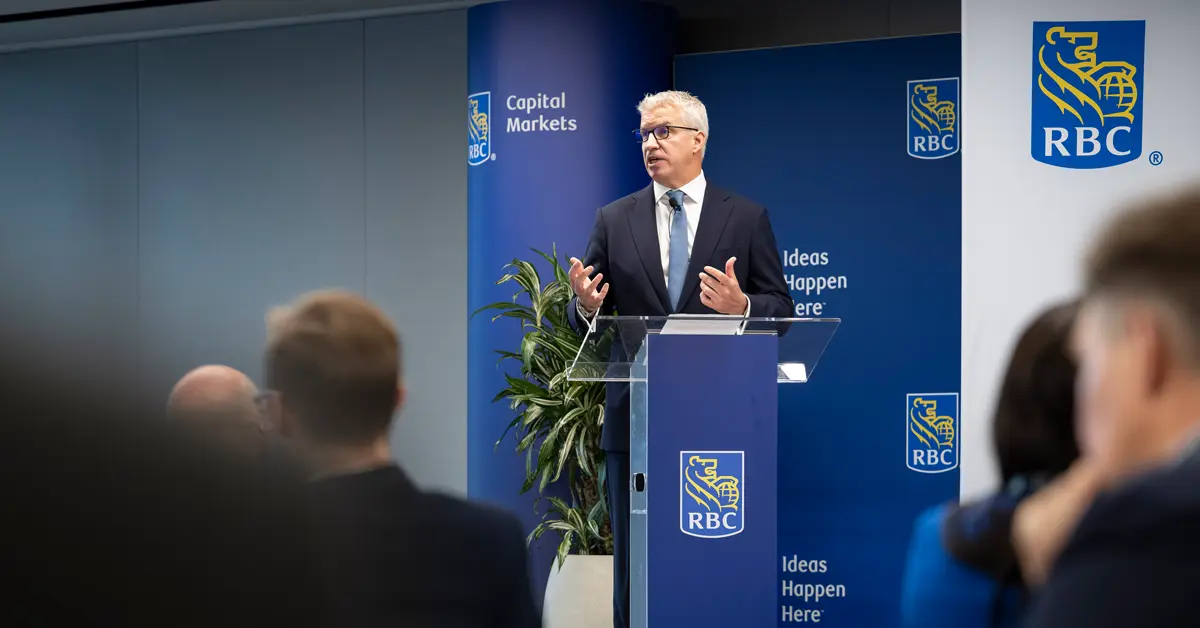
As investors convened in London for RBC's inaugural Canada Energy Comes to London Conference, one message resonated across every panel: Canada's energy sector stands at an inflection point shaped by geopolitical upheaval, technological innovation, and structural market shifts that are redefining the sector's investment thesis.
The conference brought together twelve of Canada's leading energy companies, representing $350 billion in combined market capitalization, to make a compelling case to the international investment community. What emerged across the day's sessions was a narrative anchored in five critical themes: geopolitical complexity, infrastructure transformation, technological disruption, market structure misalignment, and security imperatives.
“We must remember that it is now almost four years since the invasion. We are no closer, I think, to a credible, long lasting peace settlement in Ukraine. So we have to think about what that means for the sectors in which we work.”
Sir John Scarlett, Former Chief of the British Secret Intelligence Service
Geopolitics as strategic lens
The opening keynote, anchored by former MI6 Chief Sir John Scarlett and RBC's Head of Global Commodity Strategy Helima Croft, framed energy markets within an intensifying geopolitical context. Their discussion moved beyond commodity price dynamics to underscore how Russia's Ukraine invasion, US-China competition, Middle East tensions, and shifting Atlantic alliances are reshaping energy policy and capital allocation globally. Notably, the conversation highlighted Europe's urgent pivot toward energy security, presenting opportunity for Canadian suppliers as nations reassess energy independence. This geopolitical narrative became the throughline for investor understanding: energy is now fundamentally about security—national, economic, and strategic.
The Montney as growth engine
Ovintiv's presentation on the Montney basin exemplified the conference's shift from traditional commodity narratives toward an asset-specific opportunity. The Montney, ranked second only to the Permian in remaining North American oil resources, is entering a critical development phase supported by LNG infrastructure buildout. With Ovintiv’s core position exceeding 500,000 net acres, the Montney affords it with 15-20 years of premium oil inventory generating wellhead returns exceeding 50%—competitive with the Permian despite higher perceived jurisdictional risk. What distinguished this conversation: Ovintiv has actively deployed technology to de-risk development. From automation on 2,300 wells to real-time frack optimization and AI-driven drilling prediction, Ovintiv’s message was clear—ongoing innovation is crucial to stay ahead.
“The Montney is second largest remaining oil resource in North America, second only to the Permian. The returns in the Montney in the condensate window compete with the best plays in North America.”
Aaron Felton, Vice President & Chief Operations and Supply Management, Ovintiv
Power market recalibration
The day's closing "Power Play" session unveiled perhaps the most urgent market dysfunction: North American power prices in many markets are fundamentally broken. Despite significant demand signals—from nuclear revival driven by data center demand and climate imperatives to natural gas supply constraints—current market structures are failing to incent new generation. Capacity prices in some markets are capped below cost-of-entry levels, five-year lead times for combined-cycle gas-fired generation are colliding with regulatory frameworks expecting quicker response, and uranium is pricing below levels needed to incentivize new supply. Yet this dysfunction is creating opportunity: utilities and regulators are recognizing the necessity for market restructuring, creating windows for disciplined operators with long-duration assets and contracting expertise.
Security becomes central
Beneath each conversation—from geopolitical risk to uranium supply to labor force development—ran a theme that would have seemed extraordinary a decade ago: security. Energy security is now driving investment decisions previously dictated by pure economics. Nuclear's unexpected revival reflects this shift. As panelists noted, North American markets are finally approaching energy buildout questions with security of supply and national resilience front and center, aligning with how global markets (China, Eastern Europe) have long operated.
“Power prices across North America are not reflecting the cost of new entry. They must rise whether it's in merchant markets or through contracts for longer duration to send signals for additional supply to be added to meet rising demand.”
Jason Comandante, Senior Vice President, Supply & Trading, Capital Power
Execution and scale
A final theme crystallized across sessions: execution capabilities are becoming the differentiator. Whether Ovintiv's operational excellence, RBC's investment banking platform, or panelists' emphasis on standardization and de-risking in nuclear, the implicit message was that access to capital is table stakes—what separates winners is the ability to execute at scale amid complexity.
“We are not adding a halo of a revolution in small modular reactors. The fundamentals are there just simply because we're restarting reactors that have been shut down and extending the life of reactors.”
Grant Isaac, President & Chief Operating Officer, Cameco