
President Trump once again triggered an oil market selloff by signaling that the war will end soon, but it is unclear how far back-channel talks have progressed or if the IRGC is in any mood to settle at this stage when they remain in firm control of the Strait of Hormuz. Iranian state media swiftly denied President Trump's claims that there had been successful talks, and the Foreign Ministry released a subsequent statement that the White House was merely seeking to buy time for U.S. military operations and to reduce energy prices.
Qatar, Turkey, Pakistan, and Oman have been passing messages between Tehran and Washington, but skepticism abounds that we are just days away from a lasting deal, even if Iran Parliament Speaker Mohammad-Bagher Ghalibaf was indeed on the receiving end of those diplomatic overtures. Ghalibaf, for his part, also denied that negotiations have been held, calling the commentary "fake news intended to manipulate financial and oil markets."
“Multiple stakeholders have a say in how this war ends, and ships, not soundbites, will likely be what ultimately matters for physical markets.”
Helima Croft, Head of Global Commodity Strategy and MENA Research, RBC Capital Markets
Everything indicates that the IRGC is now being run by younger, more hardline members, and the killing of national security head Ali Larijani likely eliminated an interlocutor who would have been expected to play a key role in any diplomatic negotiations with Washington. Ongoing oil exports and the recent lifting of U.S. sanctions likely reduce their near-term financial need to make sweeping concessions to Washington.
This latest "over soon" intervention comes against a backdrop of an increasing buildup of U.S. forces, with thousands of Marines being deployed to the region along with additional U.S. naval assets. Meanwhile, the Israelis are continuing with their attacks on infrastructure sites, hitting multiple targets around Tehran, with widespread blackouts reported. Lower oil prices likely advantage those seeking a more maximalist agenda aimed at degrading IRGC capabilities. At the same time, Iran continues its efforts to raise the economic cost of the war, with multiple regional energy facilities targeted in recent days, along with attacks targeting U.S. military bases and diplomatic sites.
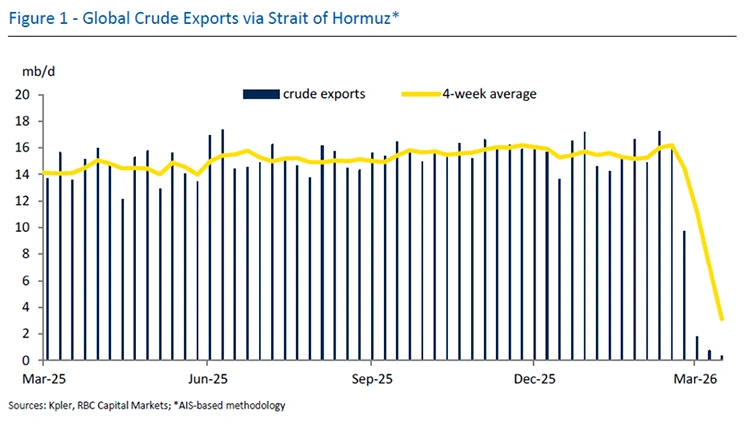
All this underscores the essential fact that we are not dealing with single decision-maker dynamics. Unlike the case with tariffs or Greenland, multiple stakeholders have a say in how this war ends, and ships, not soundbites, will likely be what ultimately matters for physical markets.
Helima Croft and Christopher Louney authored "Iran Quick Take: Message Management," published on March 23, 2026. For more information on the full report, please contact your RBC representative.