

What is driving the next phase of ETF innovation?
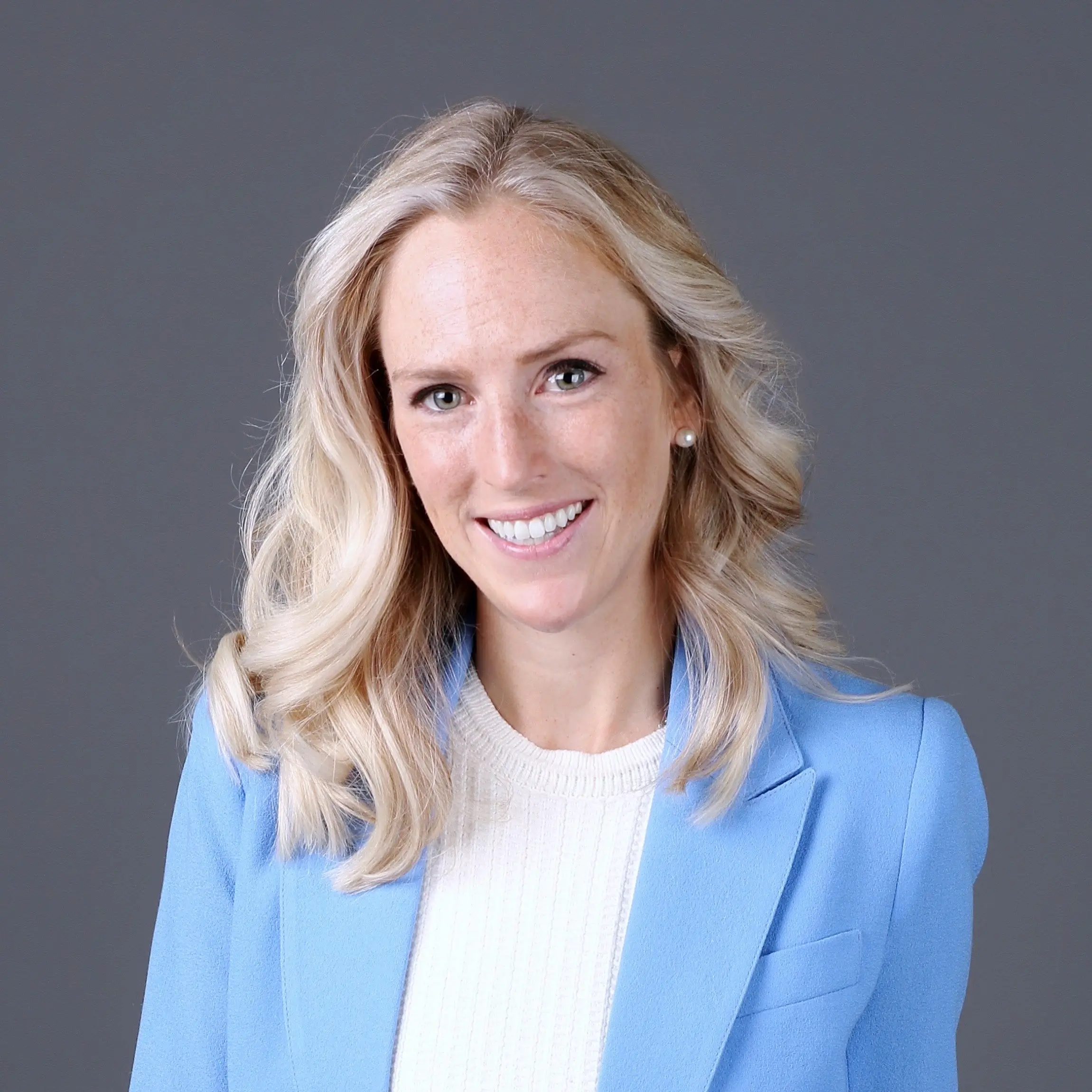
Valerie Grimba: We're in the midst of an absolute explosion in the ETF space. And I think we can boil that down to two things. The first is the breadth of adoption. A wide variety of client types have gravitated to the ETF vehicle for transparency, intraday liquidity and low costs. The second is the explosion of products. Today, with more than 4,000 ETFs in the U.S. and well over 10,000 globally, investors can use them with much more precision in building portfolios.
"Twenty years ago, ETFs were this blunt force object. Today, with more than 4,000 ETFs in the U.S. and well over 10,000 globally, investors can use them with much more precision in building portfolios."
Valerie Grimba, Global ETF Strategist
Bryan Johanson: The global ETF market has now surpassed $20 trillion. We will probably see the first trillion-dollar ETF this year. But the bigger story is how much more the vehicle can do. As ETFs have become more precise and versatile, they have also introduced more complexity around liquidity, execution and risk. How are regional ETF markets evolving — and where are we seeing convergence?
Valerie Grimba: It really comes down to a combination of end-investor bias and market structure. At RBC, we sit at the intersection of the global ETF market, with leading ETF market-making desks in Canada, the U.S. and Europe. That gives us insight from both regional and global clients. The U.S. stands out for its scale. That depth of liquidity helps support a highly competitive market. Liquidity begets liquidity. Canada has historically led in income-focused products, including covered call strategies. Canadians are obsessed with yield, and there is an insatiable demand for these products. Europe remains more fragmented, but that has supported innovation in product design and currency hedging.
Bryan Johanson: Europe may be the wild card with its structured product heritage; it could play a key role in shaping how complex strategies evolve within ETFs. A more developed view on Europe is critical to understanding the next phase of global ETF innovation. Despite regional differences, the global investor base is increasingly aligned around outcomes — income, downside protection and defined returns.
"Europe may be the wild card. A more developed view on Europe is critical to understanding the next phase of global ETF innovation."
Bryan Johanson, Head of North American Client ETF
Valerie Grimba: There are more similarities than differences. We're seeing faster global replication as issuers adapt structures like auto-callables or outcome-driven products into local ETF formats. Innovation is likely to become more global as best practices spread across regions, particularly as Asia-Pacific and the Middle East develop.
Bryan Johanson: What do asset managers need to think through before bringing an ETF to market? Would you agree the market is crowded?
Valerie Grimba: It is increasingly competitive, but there are still avenues with a long runway ahead. The question is no longer just, can we launch an ETF? The conversation now is, should we launch this ETF? Asset managers need to think through what problem the product is solving for clients and what end need it is meant to meet. They also need to consider engagement with investors and the live trading environment — indicative spreads, how market makers will price it and what it might look like to trade the product at different sizes.
"No matter how much alpha may be embedded in the underlying strategy, performance comes down to both the fund itself and the performance of the market structure around it."
Bryan Johanson, Head of North American Client ETF
Bryan Johanson: As ETFs become more complex, why do structure and trading mechanics matter more?
Valerie Grimba: Quote quality is so important and often overlooked. There are real resource requirements involved in providing two-sided markets, especially as more complexity comes into the ETF structure. That increased complexity often requires a bigger development lift on the market-making side and more ongoing maintenance. Product construction is also very important. Strategies that may look similar can trade very differently on screen. If spreads are wider than expected, there is almost always a reason, and it can often be traced back to portfolio construction.
Bryan Johanson: No matter how much alpha may be embedded in the underlying strategy, performance comes down to both the fund itself and the performance of the market structure around it. What could shape the next three to five years for ETFs?
Valerie Grimba: Execution is a critical part of the investment outcome. In more complex or less liquid strategies, working with an experienced trading partner can really help.
Bryan Johanson: ETFs can be the mechanism of price discovery for a market that's closed during local hours, or for a less liquid asset that isn't trading during volatility. ETFs trade continuously, providing intraday liquidity and price discovery even when underlying markets might be less active.
Bryan Johanson: What is driving the growth of structured outcomes and systematic strategies?
Valerie Grimba: We're seeing increasingly volatile environments. We've heard a lot about the death of the 60/40 portfolio. We had 2022, where both stocks and bonds — the inverse correlation broke down, and both were negative. Investors are looking for other opportunities, other ways to deliver alpha or capital preservation. And then we have this gift of accessibility through the ETF. We like to throw around this word democratization of investment strategies. Because of the ETF wrapper, we can deliver strategies that previously were only the domain of institutions.
"Because of the ETF wrapper, we can deliver strategies that previously were only the domain of institutions."
Valerie Grimba, Global ETF Strategist
What do investors need to understand about these more complex products?
Valerie Grimba: First and foremost, understand the product, do your due diligence. Most ETFs are doing what they're designed to do. You need to understand the trade-offs that are embedded within the ETF and how it trades, so you can minimize execution costs and make entering or exiting positions as efficient as possible.
What could shape the next three to five years for ETFs?
Valerie Grimba: We're going to see a continuation of themes already playing out, along with a shift toward a more global system. Structured outcome strategies will continue to grow as education improves and investors become more comfortable. That growth is supported by demand for new ways to pursue alpha, capital preservation and more defined outcomes in volatile markets. ETF share classes are also important to watch. Over time, they could broaden the market by bringing strategies from the traditional mutual fund world into the ETF ecosystem.
Bryan Johanson: I do believe it will result in significant product proliferation, which could allow investors more variety but also reinforce some constraints facing market participants.
Valerie Grimba: Private assets are another area of innovation, although some features investors value most in ETFs are not always fully aligned with private market exposures. And then there is tokenization, which could help streamline infrastructure, enable more flexible product design and expand global reach.
Bryan Johanson: The ETF market is entering a more complex and more interesting phase, with innovation continuing to push the structure into new areas.