
This excerpt is from an Atlantic Council Front Page panel on Wednesday, May 20, 2026.
Fred Kempe: Welcome to Atlantic Council Front Page, our premier platform for global leaders. I'm Fred Kempe, president and CEO of the Atlantic Council.
We are delighted today to welcome His Excellency Doctor Sultan Al Jaber for a discussion on the global energy implications of the war with Iran and the UAE's energy strategy in a time of profound geopolitical transformation.
Today's conversation will be moderated by Helima Croft, herself a leading expert on these issues, as well as a member of the executive committee of the Atlantic Council's Board of Directors. She's also the Managing Director and Head of Global Commodity Strategy and MENA Research at RBC Capital Markets.
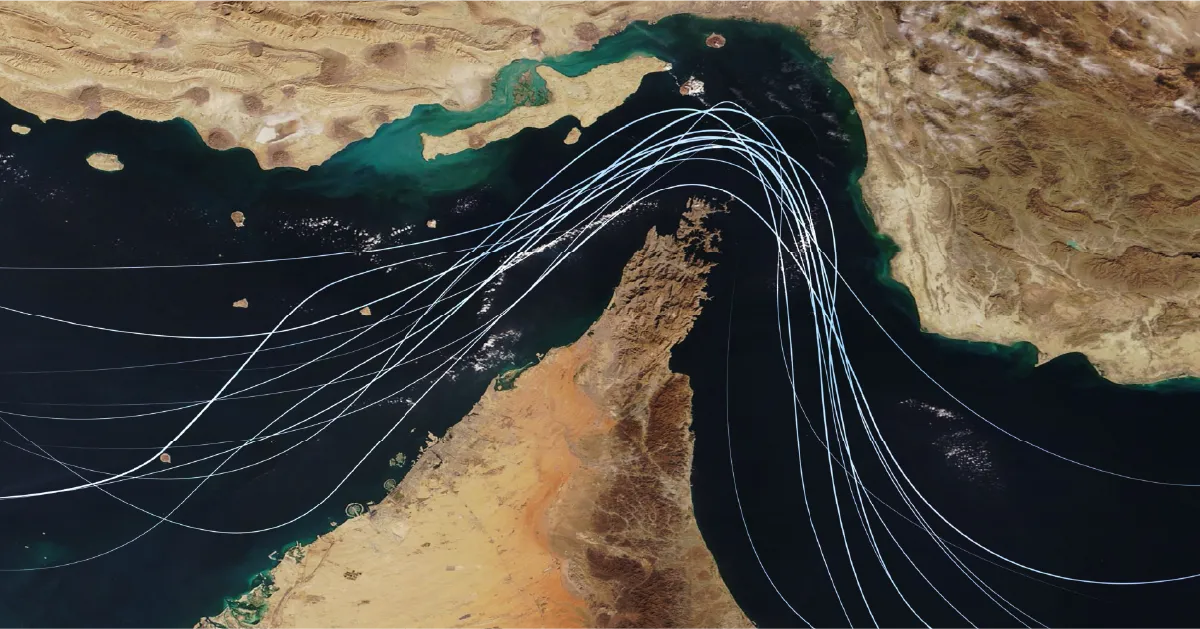
Hormuz's global toll
Kempe: Doctor Sultan, you have been extremely vocal about the cost to the global economy of the closure of the Strait of Hormuz. Can you give us your latest thoughts on the cumulative impact of this crisis?
Dr. Sultan Al Jaber: The closure of Hormuz is the most severe supply disruption on record. So far, the world has lost over a billion barrels of oil, and that number goes up by almost 100 million barrels every single week. Brent is trading at 40% above pre-closure levels.
Helima Croft: Doctor Sultan, the costs you've laid out are absolutely stunning, and I would argue still underappreciated by many watchers of this war. I wanted to ask you specifically about the impact on the UAE.
Dr. Al Jaber: The UAE was targeted by more than 3,000 missiles and drones — more than any other country in this conflict. Every single target was civilian: airports, terminals, refineries, gas processing plants, residential areas, shopping malls, and most recently, the Barakah nuclear power plant.
The UAE was attacked for its model of development. A model based on coexistence, tolerance, economic openness, and a model that has enabled success over the years by building bridges and creating very unique relationships and partnerships globally.
"Energy security is no longer just about your ability to continue to produce. It is about routes, access, storage, and redundancy."
Dr. Sultan Al Jaber, Minister of Industry and Advanced Technology for the UAE
Lessons from crisis
Croft: Doctor Sultan, I had the pleasure in March of hearing a speech that you gave on the war, and you really talked about the lessons that we need to learn from this experience. Can you talk about how we come back from this better, if possible?
Dr. Al Jaber: First, resilience matters a great deal. In fact, it is a critical success factor. It may seem expensive until the day you need it, and when you need it, it becomes priceless. Second, AI must be built in, not bolted on. In a crisis, the speed of insight and the speed of decision-making is the difference between continuity and disruption.
Third, energy security is no longer just about your ability to continue to produce. It is about routes, access, storage, and redundancy. Right now, too much of the world's energy still moves through too few choke points. That is exactly why the UAE made the decision more than a decade ago to invest in infrastructure that bypasses the Strait of Hormuz, and it is why we moved ahead with our second pipeline in 2025. Today it's already almost 50% complete, and we are accelerating its delivery toward 2027.
Exiting OPEC
Croft: I wanted to ask the question about OPEC. There has been a lot of conversation about the UAE's decision to exit OPEC and OPEC+. Can you walk us through the rationale behind that decision and what you hope will be the benefits?
Dr. Al Jaber: The UAE is entering a new chapter of growth. This was a sovereign strategic decision made with clarity, passion, conviction, and full confidence. We want greater flexibility to invest. We want greater flexibility to grow, to expand, to partner, and to create long-term value.
Croft: Doctor Sultan, thank you so much for spending time with us this morning in this invaluable conversation, and thank you so much for your extraordinary partnership with the Atlantic Council. We very much look forward to seeing you in Washington again and we very much look forward to joining you in Abu Dhabi soon. Thank you so much.
Dr. Al Jaber: Thank you so much, Helima, and thank you to the Atlantic Council for giving me this opportunity.