

Innovation set to fuel a paradigm shift
The future of retinal disease treatment stands on the verge of an ambitious paradigm shift that will dramatically reduce patient burden, preserve patient vision for longer, and deliver huge commercial opportunity for those at the forefront of innovation.
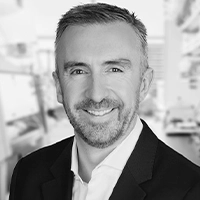
That's according to 4D Molecular Therapeutics (4DMT) Chief Commercial and Business Officer, Chris Simms. The company is currently positioning its lead candidate, 4D-150, as a potential "backbone therapy" for diseases such as wet age-related macular degeneration (wet AMD) and diabetic macular edema (DME). The treatment replaces frequent eye injections with a single injection that delivers vastly superior durability.
"For years, innovation in retina care has largely focused on extending durability by a few weeks at a time," Simms says. "Treatments that once required injections every four weeks evolved into therapies administered every eight, twelve, or even sixteen weeks. While those gains have been meaningful, the next generation of therapies could fundamentally reshape the treatment model altogether.
"Our lead gene therapy aims to deliver sustained anti-VEGF expression through a single injection, potentially reducing or eliminating the need for repeated treatments," he adds, pointing to Phase 2 data in which patients who previously required around ten injections annually remained injection-free years after receiving a single dose.
"Our lead gene therapy aims to deliver sustained anti-VEGF expression through a single injection, potentially eliminating the need for repeated treatments."
Chris Simms, Chief Commercial and Business Officer, 4D Molecular Therapeutics
A win-win: reduced treatment burden and reduced sight loss
As well as considerably reduced treatment burden, 4D-150 also delivers the potential to extend a patient's vision for far longer, explains Simms.
"The introduction of anti-VEGF therapy for retinal diseases happened around 2006, and these medicines are highly efficacious. They work really well."
"However, patients have to come back frequently to get re-injected, and – certainly from a wet AMD patient perspective – these patients are typically older, often in their 80s. So, the burden of getting into the clinic, of having a caregiver bring them, and the recovery time post-treatment, can mean that many patients either cease taking therapy altogether, or their frequency of treatment starts to wane. That will result in patients' vision starting to erode and, in some cases, being lost.
"We believe that if you have a 4D-150-like product on board, which is constantly expressing an anti-VEGF therapy – it's always there, it's transduced retinal cells, and it's producing the medicine the patient needs on an ongoing basis – then not only do you make a massive impact on the treatment burden, but you also have the potential for patients to hold on to that vision that they gain."
"You have the potential for patients to hold on to that vision that they gain."
Chris Simms, Chief Commercial and Business Officer, 4D Molecular Therapeutics
Market demand for innovation
Simms believes that market demand for continued innovation creates a great opportunity for 4DMT to access growth.
"The wet AMD and DME markets are really well established. We believe that, in our launch window horizon, the total value of the anti-VEGF market globally is probably going to be in the range of $20 billion – and that's grown fairly consistently," he explains.
"There's been a continuation of innovation — with new brands coming to market, delivering incremental durability.
"But you also have an aging and growing patient population. So as that population continues to grow, so the market is projected to grow — we think at a three-plus percent range for the foreseeable future. The market opportunity is driven by the need to reduce the treatment burden. So, that's where we think we fit in, and our value proposition is very differentiated with durability."
"The market is projected to grow – we think at a three-plus percent range for the foreseeable future."
Chris Simms, Chief Commercial and Business Officer, 4D Molecular Therapeutics
The potential for global rollout
With demand for innovation in domestic markets acting as a springboard, 4D-150 is also well positioned to become a major global product.
"We think the unmet patient need is a global unmet patient need," he says. "The benefit of 4D-150 – a safe, efficacious therapy that's constantly on board – can open doors to countries where access to care is not as easy as it is in the U.S.
"In countries where patients can only see a retina doctor once or twice a year, a therapy that's always there and providing coverage could be more meaningful than in countries where you can see a doctor more frequently.
"We believe that it's a global opportunity. Certainly, the U.S. is the largest and most valuable market – but we've designed our program for global application."
As part of that plan, 4FRONT-1, the company's first phase-three trial for wet AMD, completed enrollment at the end of March in North America, with 90% of the sites in the U.S. and the balance in Canada. 4FRONT-2 is a global trial with sites across the U.S., Europe, South America, and Asia Pacific.
The key for a successful rollout of the program is to start early and to engage the right people: "These things take time, and I don't think any launch that's been successful has had anyone look back and say, 'Oh, we started too early.'"
"It's also important to work closely with the retina community," he adds. "We're so fortunate to work with a retina physician community that's highly engaged. They want to see advancements in science for their patients, and they're open to working with us.
"Our vision is that in the future this disease is treated, for the majority of patients, with that backbone therapy approach, where patients are provided with constant coverage. And we hope, for the majority of patients, that the treatment of 4D-150 will be the last needle in their eye that they'll ever need."
"I don't think any launch that's been successful has had anyone look back and say, 'Oh, we started too early'."
Chris Simms, Chief Commercial and Business Officer, 4D Molecular Therapeutics