
APA Corporation is poised for an oil market shift
Unflagging commitment to exploration
After 2014, when OPEC repeatedly raised output, helping to drive down oil prices, many companies gave up global oil exploration and investing in upstream projects.
APA Corporation was an exception. “We did not stop exploring for oil and gas, and we will not stop,” says Ben Rodgers, Executive Vice President and Chief Financial Officer of the global energy company.
This puts APA in a strong position, Rodgers believes, now that soaring global power demand and the need for energy security are dominating the picture: “We’ve got decades of growth of crude demand that we know the world is going to need.”
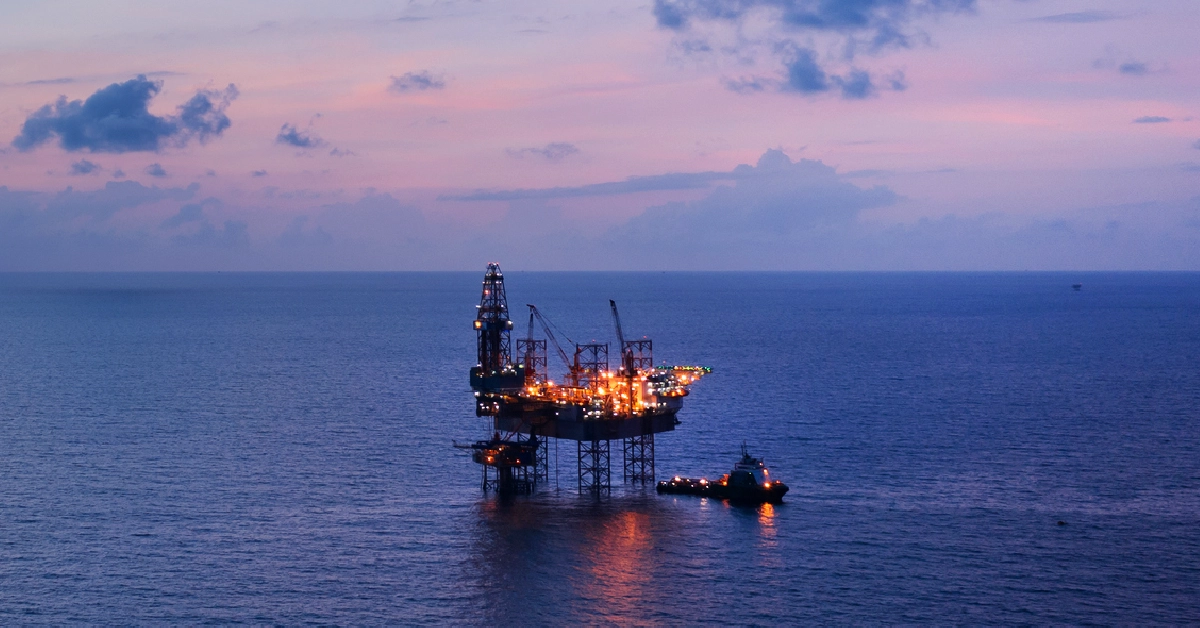
APA’s subsidiaries have operations in the Permian Basin in the south-western U.S., and a long-standing presence in Egypt. It also has a joint venture with Total offshore Suriname, and last year it announced preliminary results of an exploratory well in Alaska, confirming the successful discovery of a reservoir.
"We did not stop exploring for oil and gas, and we will not stop."
Ben Rodgers, Executive Vice President and Chief Financial Officer, APA Corporation
Diversification pays off
“We think that portfolio diversity – not just in upstream assets, but geopolitically – is really going to set us apart,” says Rodgers.
The advantages in terms of exposure were demonstrated when the company decided to stop developing its North Sea assets. The Russia-Ukraine war had triggered a U.K. energy profits levy, followed by more stringent emissions requirements.
“If we were solely in the North Sea, that would have been detrimental for our business,” says Rodgers. “We think it’s good to be diverse.”
That extends to commodities as well as geographies. Besides its oil production, APA produces natural gas in the Permian Basin, where pricing has been depressed due to infrastructure constraints. Through its trading portfolio, the company is able to purchase third-party gas at Waha and transport it for sale into the Gulf Coast's premium pricing markets.
In Egypt, which has a shortage of both oil and gas, APA recently renegotiated its gas contract with the government to achieve a competitive price.
“We’re well positioned to take advantage of both commodities,” says Rodgers. “If there’s a super cycle in one and it’s flat in another, we’ll have exposure to both.”
An intentional partnership
In 2027, APA aims to allocate more capital to its exploration in Suriname, Alaska, and Uruguay. In the meantime, its production plans are steady by design.
“We can hold production flat, because we have organic growth coming in two years, when our joint venture project with Total comes online,” Rodgers explains.
The company took on the full risk of drilling its own exploration well before bringing in Total. “That was very strategic – they are one of the top operators of FPSOs around the globe,” says Rodgers. “We knew we could learn from [Total], but also hand over the keys to someone very adept at [large scale large capital projects].
“We’re very intentional about who we partner with. It’s got to be in the right basin and at the right time for the project.”
Cost leader ambition
In 2025 APA went through a significant restructure and leadership change, reducing its officer count by a third. Rodgers says this has enabled it to drive improvements and focus on becoming the lowest cost operator.
He sees this as critical positioning for the point when the U.S. oil market starts to shift from a focus on unconventional shale to focus on the most capital-efficient hydrocarbons.
“I think the shift will start to come more from the sell side and the investment community to give more value to conventional assets and to underwriting long-term projects like we have in Suriname,” he says.
“The number one thing we can do in the meantime is continue to execute.”
"I think the shift will start to come more from the sell side and the investment community to give more value to conventional assets."
Ben Rodgers, Executive Vice President and Chief Financial Officer, APA Corporation