

How is the energy transition evolving across global markets?
Anthony Ianno: Despite the uncertainty in the world, the tone at our Global Energy, Power & Infrastructure Conference in New York couldn't have been more optimistic.
The themes have changed radically over the last couple of years. It's still all about energy transition, but the definition of transition has changed. Gas has moved to a permanent part of the transition, and we're talking more about technology innovation, whether on the grid side or in nuclear.
Rob Nicholson: In Canada, our grid is already 90-plus percent green. We are certainly looking at more renewables, more gas, but also storage technologies. Nuclear makes up 40 to 50% of Ontario's electricity – we're fortunate that we never shut down our nuclear plants.
There are also a lot of dollars that are going in to harden the grid for energy security. At the conference, one utility said they now spend over $1 billion annually in capex, compared to about $400 million 10 years ago.
Ralph Ibendahl: The focus in Europe is very much on the renewable side, but there's been a bit of a shift away from investment in generation and more in the grid, to allow us to catch up. Because we've been front-loading on renewables, we have some constraints in the system.
Antony Steinberg: We're seeing an increased level of interest in the Australian power market from global financial investors, as well as strategic players.
The renewable build-out here is taking a bit longer than expected, given the need to create a diverse set of generators. As a result, we've got increased power prices. That's a dynamic that the sophisticated global financial investors are quite focused on.
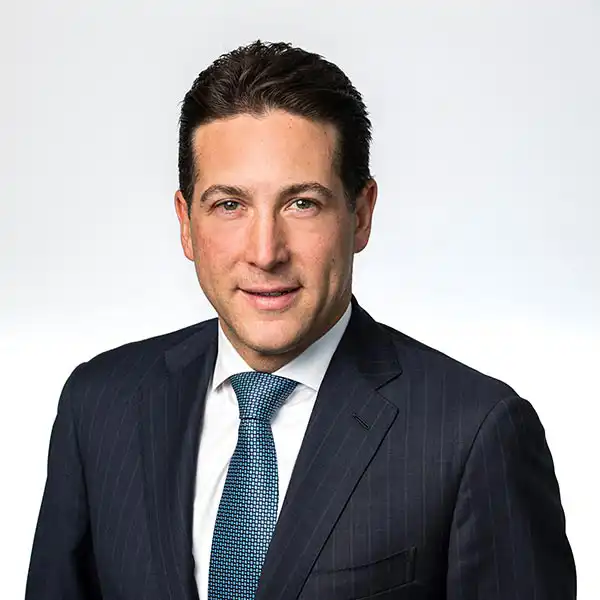
"We're seeing an increased level of interest in the Australian power market from global financial investors, as well as strategic players."
Antony Steinberg, Australia Head, Power, Utilities & Infrastructure
What's the practical impact of rising concern over affordability?
Ibendahl: In Europe the Iran war has certainly had more of an impact. Policymakers are thinking about how to try to soften the blow from higher power and energy prices. That raises a question of how much we can realistically invest in the transition.
Ianno: Rising demand has caused prices to go up. Data centers are being blamed, but they're not the only cause. Where before we had higher reserve margins, we're eating into that now, so we're going to have to build power.
Nicholson: The affordability issue is very real. It's not just on the generation side, it's across the whole ecosystem of electrical delivery. It creates great opportunities for investors in the regulated business, because this capex program doesn't seem like it's abating any time soon.
Steinberg: Affordability is front of mind for people when they see the amount of demand that data centers are going to take from the grid. But the region also wants to attract hyperscalers to the market, so we're seeing a balancing act.
The Microsofts of the world are writing very significant contracts in Australia. That's helpful for the operators, such as AirTrunks and XDC, who are signing really large contracts that we just haven't seen before in this market.
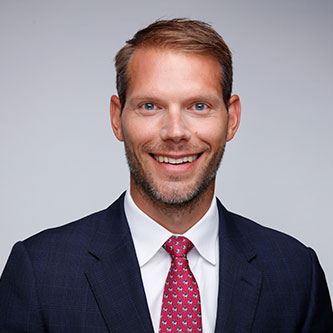
"European policymakers are thinking about how to try to soften the blow from higher power and energy prices. That raises a question of how much we can realistically invest in the transition."
Ralph Ibendahl, Global Head, Energy Transition & Europe Co-Head, Power, Utilities & Infrastructure
Where is the investment being channeled?
Nicholson: We advised the Canada Growth Fund and the Build Ontario Fund in a combined $3 billion equity capital deal for a nuclear SMR project in Darlington – the first in the West to be built. It will take nine years to build and cost around $22 billion.
It's a real sea change for our federal government, which is very much in build mode. And the regulators are now much more interested in figuring out how things can get done, rather than limiting what people can do.
Ibendahl: One of the big deals that we were involved in is the €9.5 billion investment in TenneT Germany, one of the transmission system operators, to help fund the build-out of the German grid.
How are companies funding this investment?
Ianno: All our utility clients are out there with active ATM programs. We are seeing record debt issuance in the space, as well as traditional infrastructure capital, and the insurance pockets that are looking to do private investment into existing and new-build assets.
Nicholson: Maple Eight, the largest Canadian pension funds, have been focused on global investments, but they're now looking for opportunities in Canada.
We're seeing more pension funds willing to look at carbon-emitting investments – not coal, but gas or integrated companies.
Ibendahl: One of the evolutions we've seen is the ability to employ insurance capital into large-scale infrastructure projects in Europe. We've advised on three transactions that involved structured capital in the billions.
Steinberg: On the build-out of wind and battery storage, we're seeing some structured products in pref equity, where the large financial investors are looking to shore up their return when there is incremental risk compared to a brownfield asset.
On the transmission side, some financial investors utilizing holdco facilities at the equity level to raise the capital that needs to be reinvested. Others are looking down to sell down some equity and recycle that capital back into the vehicle, but share the load with another investor.
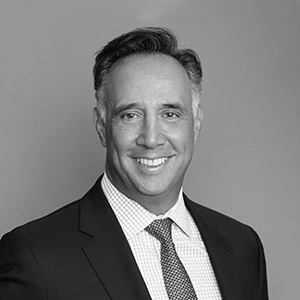
"All our utility clients are out there with active ATM programs, and we're seeing record debt issuance in the space."
Anthony Ianno, Global Co-Head & Vice Chair, Power, Utilities & Infrastructure
How are valuations in the private and public markets shaping the picture?
Ianno: Three to five years ago now, all the conventional generation companies were going private because there was a much better bid on that side. Those assets were undervalued, and now they're coming back to the public markets, as with Constellation buying Calpine.
Nicholson: We worked on behalf of Boralex, which was a publicly-listed renewable energy company. We started working with the board over a year ago, evaluating their options for funding their very significant growth pipeline.
They concluded it would be more competitive for them to be in the private markets, so we ran a process where they ultimately became a private company. That was driven by a valuation disconnect between what the private and public markets were willing to pay.
But we have seen some pretty terrific valuations coming out of the public markets on nuclear SMR and other companies. Even more important, they're raising significant amounts of capital to go to the next stage with their technology or growth.
Ibendahl: In Europe, we've seen a lot of equity raises from existing large-scale players, whether that's rights issues or follow-ons. We haven't seen so many IPOs, but I do have a feeling that the public markets are going to play a bigger role going forward.
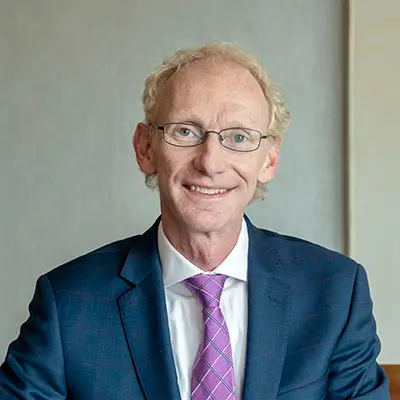
"We have seen some pretty terrific valuations coming out of the public markets on nuclear SMR and other companies. Even more important, they're raising significant amounts of capital."
Rob Nicholson, Canadian Head, Power, Utilities & Infrastructure
How is RBC supporting clients to navigate volatility in these markets?
Ianno: One of the benefits of being a full-service investment bank with a global footprint is that we have the ability to guide our clients and advise them on which market and region to go into.
There is volatility out there, and the markets can be crowded, so giving the best advice, leading with content, is the way we try to tackle that.
Ibendahl: The other thing we do really well is leverage our deep sector knowledge outside the power and utilities and investment space that's relevant to our clients. Being able to bring our relationships across the datacenter space to our power clients has been extremely helpful for them.