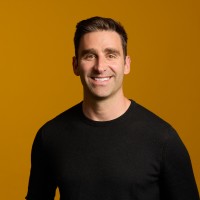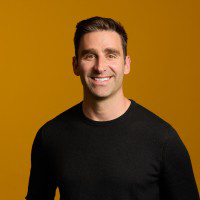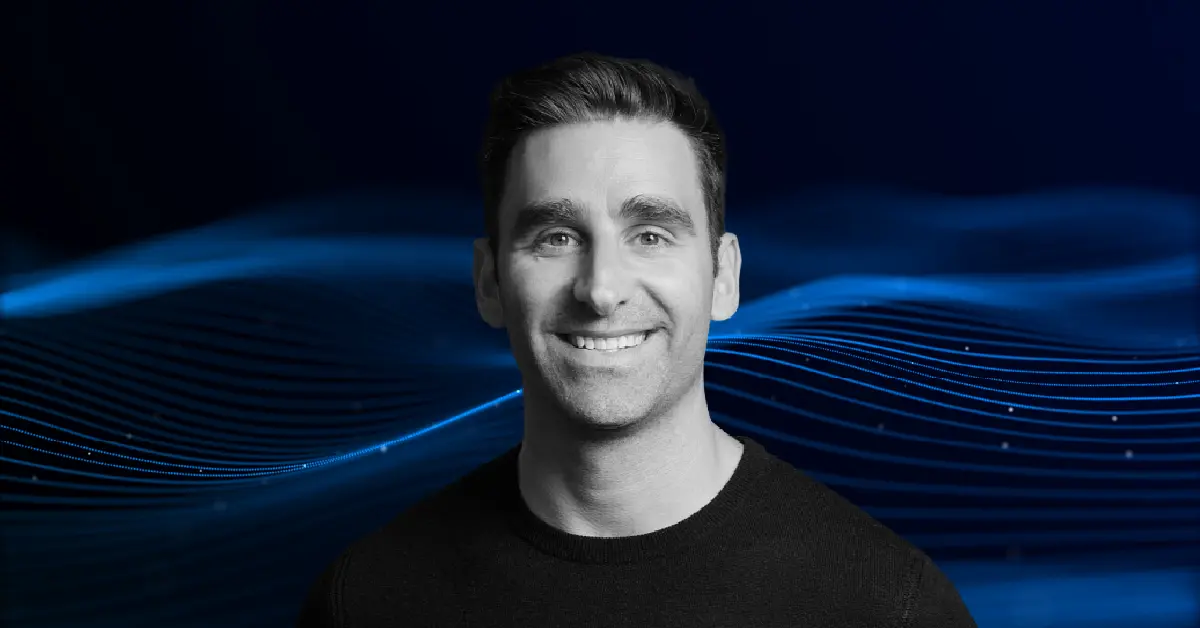
Rich Mazzola is Head of Product & Commercialization at Bellwether, a moonshot from Alphabet's Google X lab (whose notable projects include Waymo autonomous cars, Verily life sciences, Google Brain, Intrinsic robotics, and Wing delivery drones). Bellwether combines Google's geospatial data, DeepMind's AI models, and decades of climate science to build what it calls the first prediction engine for the Earth and everything on it.
Working across a $6 trillion insurance industry and public-sector partners, Rich translates that predictive capability into real-world systems: emergency response, disaster recovery, underwriting, risk transfer and resilience planning.
In this interview, he discusses how granular modeling is bringing capital back to abandoned markets, why most organizations fail at bold innovation, and what it means to take risk out of the system rather than just redistribute it.
Walk us through your journey to Google X and Bellwether. What set you on this path?
I started as a founder. Early in my career, I built KarmaConnect, a two-sided marketplace that tried to solve the misaligned incentives in corporate giving by turning charitable donations into a consumer-acquisition channel for corporations. I ran it for two years, got early traction in Boston, and made it into the MIT Accelerator.
MIT was right across the street from Google's Cambridge office. Google was hiring people to build customer lifetime value models across their financial services platform, which was essentially what I was doing at my startup. I shut down KarmaConnect and joined.
At Google, I moved from fintech analytics into Area 120, Google's internal R&D incubator, where I was on the founding team of Orion Wifi. We built a telecom product that now serves over 100 million subscribers through multiple cellular carriers before it was acquired by Devices & Services and integrated into the Android OS. After that, I joined the Bellwether project at Google X.
"What really drew me to Google X was what I have identified as my axiom of interests: entrepreneurship, innovative technology, small teams. Bellwether sits at the intersection of all three — and applies them to a problem worth spending a career on."
Rich Mazzola, Head of Product & Commercialization, Bellwether
What is Bellwether, and what does a “prediction engine for Earth” mean in practice?
We have built a continuously updated representation of the Earth and everything on it, at a resolution granular enough to make predictions about individual buildings.
In practice, that means we have broken the planet into 100-meter-by-100-meter pixels and we measure the state of 600 geodata layers: vegetation density, soil moisture, wind speed, rainfall, solar radiation, elevation, and hundreds more. We track how those variables change every day. Then we do the same for every structure on Earth, using Google Maps data to identify building materials, window count, age, roof type, surrounding energy infrastructure.
Using the history of how those variable states have changed, we model the interactions between them. How does a change in vegetation density in one pixel affect fire behavior in adjacent pixels? A region is a summation of pixels and buildings. You can aggregate into any geography and generate predictions about what will happen when a severe weather event intersects with that specific physical reality.
Insurance is a $6 trillion industry that is hundreds of years old. How do you get an industry like that to adopt predictive AI?
The economics are becoming impossible to ignore. When severe weather gets bad enough, it's understandable that insurers may want to take money off the table. Stop underwriting regions, pull capacity, exit markets. But that does not reduce the risk. The same amount of risk is in the system; it just becomes uninsured. The homeowner still lives there. The infrastructure still exists. All that has changed is that no one is managing the exposure.
To help the industry move to a new approach, we ran a large experiment. We got a reinsurer to use our wildfire models in regions they had never previously reinsured. With everyone managing their exposure based on the same granular intelligence, we demonstrated that you can build a functional insurance market in areas the industry had abandoned. Hiscox, a global specialist insurer, is now using our modeling to increase wildfire insurance availability for California homeowners, finding insurable risk in areas previously written off.
But better pricing is the floor. We want to help the industry move beyond distributing risk or chopping it up and spreading it across more counterparties because this does not change the underlying exposure. At Bellwether, we're working to build mitigation tools. For example, by simulating what happens when you clear vegetation in a specific pattern around a community and show that it reduces wildfire risk to the point of insurability, we hope to not only move capital, but to change the physical reality and genuinely mitigate the risk.
"Better pricing is the floor. The real opportunity is to take risk out of the system entirely."
Rich Mazzola, Head of Product & Commercialization, Bellwether
How is Bellwether changing disaster prediction and response?
Bellwether’s Hurricane Prediction and Response Tool uses a Google Research model and layers damage assessments on top. The agent takes into account 50 predicted paths simultaneously, ranks them by probability and severity, and can determine the likelihood that any set of structures will be damaged up to 15 days before landfall. Stakeholders overlay those predictions against the infrastructure they care about (hospitals, substations, bridges, real estate holdings) and get targeted damage estimates that continuously update as the forecast evolves.
On the ground, these have historically been tech-free environments. Chaotic, high-stakes, incomplete information. We partnered with Kansas City's emergency management to test our technology during a live disaster drill. Their traditional process sends volunteers into neighborhoods with clipboards and pens, which can take hours or days. Bellwether analyzed drone imagery and mapped structural damage across the entire test neighborhood in 45 minutes, matching human assessments with 96% accuracy. On the federal side, we work with the National Guard and the Defense Innovation Unit to deliver FEMA-ready reports after landfall.
My job is to build those relationships before events happen. When a hurricane forms, Bellwether needs to already be connected to the stakeholders that can use the intelligence.
"If we are meeting people for the first time during a disaster, we have already failed."
Rich Mazzola, Head of Product & Commercialization, Bellwether
What makes Google X uniquely positioned to tackle a problem like this? What does innovation actually look like inside a moonshot factory?
Bellwether can draw on the rich geospatial and computing expertise of being part of Google. We work closely with the Google Maps team and Google DeepMind, which means we have access to cutting-edge AI models and decades of geospatial infrastructure. Add to that what I call T-shaped talent: people who cover a lot of ground across disciplines but go PhD-deep in one area.
But the resource that matters most is cultural. If you give people license to be audacious without accountability, everyone will take the safer path. At Google X, if you are bold but it does not work out, you are still financially compensated, pulled back into the company, and celebrated. You cannot ask people to be genuinely audacious if failure means career damage.
What have you learned at Google X about tackling massive systemic problems, and where is Bellwether headed?
The hardest thing at Google X is holding a lofty vision while the first thing you build is very small. A wildfire model. A hazard map. I am proud of this team's ability to hold onto that vision in unglamorous ways and actually build toward it year after year.
The other lesson: we are not the smartest people in the room. Most of the team does not come from the insurance industry. We learn fast by depending on partners to teach us how their systems work. My role is the front door. Bring in the right people so the solutions function in the real world.
Where we are headed is making this intelligence broadly available — to insurers, reinsurers, government agencies, and emergency responders — so that every stakeholder managing climate risk has access to the same granular, predictive intelligence. The shift from reacting to anticipating is not theoretical anymore. We are proving it works. We're incredibly excited to scale this technology so more communities can benefit from it.