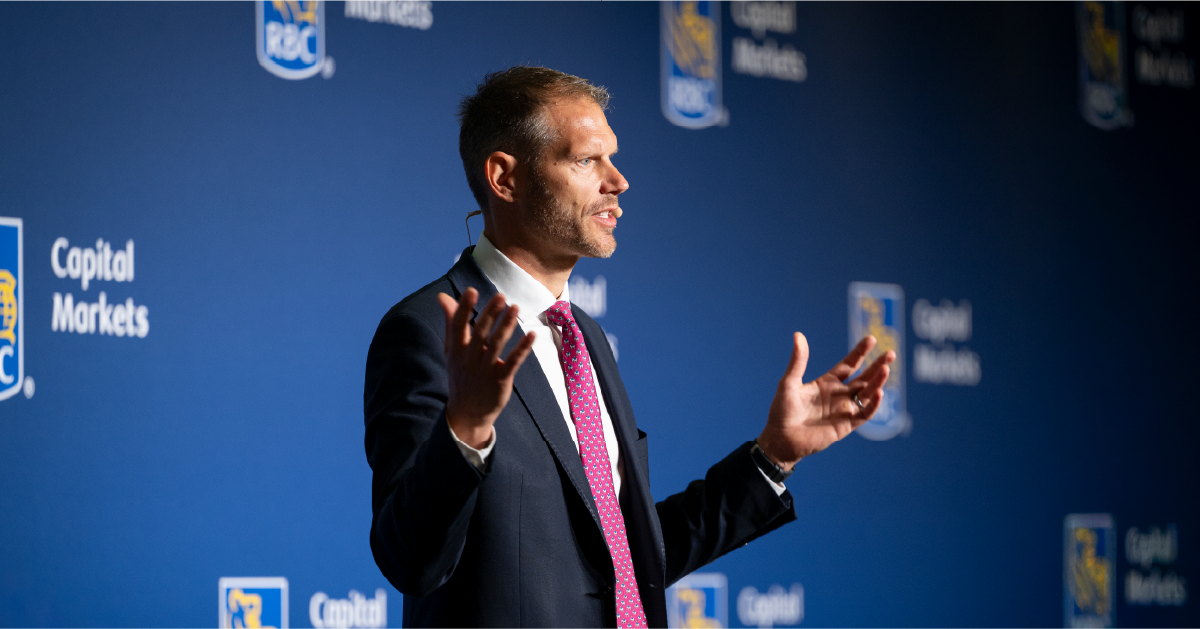
As 2026's RBC Capital Markets Energy Transition conference got under way in London, the city sweltered in record temperatures amid a heatwave that swept western Europe – underlining the urgency of transition efforts.
The fourth annual conference revealed a recalibration on several fronts. Focus has tilted from sustainability to the other points of the energy trilemma: security and affordability. And alongside renewable generation, increasing amounts of capital are being deployed to support grid expansion and resilience.
The tone was generally upbeat, as companies and investors discussed embrace new strategies and technologies to keep up with the rapidly-shifting opportunities of the transition.
Nuclear renaissance is real, but industry needs to prove itself
The renaissance of nuclear power has been hailed in many markets as a central pilar for energy security. Industry players told the conference that the biggest risk they face is less about capability but capacity, as countries race to extend the life of assets or launch new nuclear capacity.
The relative speed and versatility of small and advanced modular reactors make them a perfect "Trojan horse" for reintroducing nuclear, as one participant put it. With around 180 designs in development, one of the challenges is standardization to enable swift manufacture and deployment.
However, the sector has yet to prove that it can fulfil its promise and become cost-effective, as one speaker pointed out. Nuclear developers accept the industry needs to inspire confidence by reversing its track record of cost overruns and delays.
Technological innovations keep coming
"This is the decade of storage," one speaker declared. The battery storage sector has turned from the electric vehicle market to embrace a wider brace of industrial and grid applications. Looking ahead, long-duration storage was seen by delegates as the technology most likely to outperform market expectations.
Carbon capture is progressing in California, where a new regulatory framework has supported the first operational project to store CO2 from hard-to-abate industries.
Meanwhile, parts of the airline industry are investing heavily in start-ups to support the development of new sustainable aviation fuel – having accepted that hydrogen- and electric-powered aircraft will not see commercial service before 2050.
The conference also heard about longer-term early-stage technologies and how innovations in one field can yield unexpected breakthroughs and applications in other areas.
Investors grasp electrons and molecules
The transition's requirement for capital remains at record levels and requires a broad range of equity and debt instruments and new types of financial structures.
Many investors are broadening their focus beyond generating clean power, to the process of moving it reliably at scale. One example is the recent €9.5 billion investment in TenneT Germany, a transmission system operator, to help fund the build-out of the German grid.
Infrastructure to support datacenters and electrification is another priority. With the AI sector moving at a much faster pace than energy, one challenge is finding ways to synch the two timetables.
Some fund leaders are focused on "control of the electron as well as the molecule" – investing in biofuels and synthetic fuels alongside renewable generation and grids. The U.S. biofuel economy is booming thanks to new mandates to benefit farmers, while Italy is heavily incentivizing biomethane to strengthen its energy security.
Policy tackles bottlenecks and affordability
Geopolitical ripples continue to impact the energy transition, without derailing the process. And many governments are working hard to address the big challenges and bottlenecks.
With grid congestion a common theme, the conference heard about the UK government's decision to reorder its queue, prioritizing strategically-important and commercially-ready projects for plug-in. At the same time, the UK is working to increase its electricity demand, to spread the cost base and drive down consumer bills.
While some regulation is encouraging innovation and development, other well-intentioned policy has unforeseen effects. Successive speakers appealed for global policymakers to provide the stability and certainty required to support continuing investment in the transition.