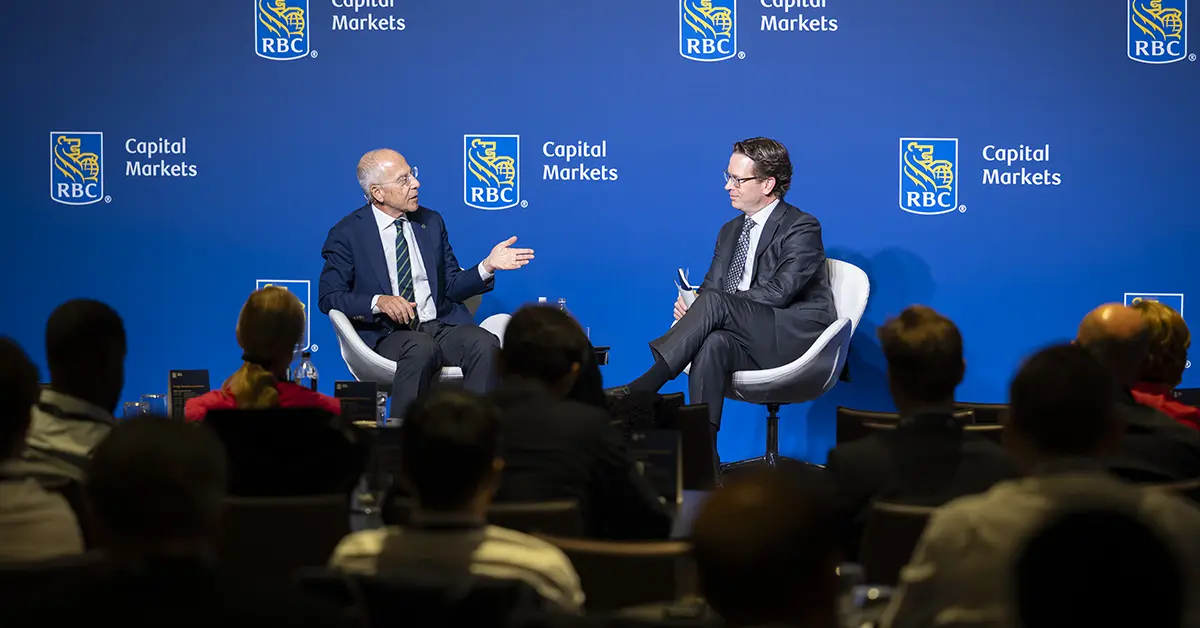


Starace on the transition, geopolitics, and keeping up with demand
Electricity demand poses future challenge
Projections of soaring energy needs have hit the headlines recently. But Francesco Starace believes the practical effects of electrical demand growth, in particular, are still underappreciated.
As the former CEO of Enel Group points out, the sources of global demand are vastly more numerous and complex than the thousands of electricity generators.
“No one has a clue,” he believes, how the system will meet projected demands from mass adoption of EVs, heat pumps, and industrial electrification. “The electricity systems we have today are not designed for that: they are designed for another world,” he adds.
Nevertheless, Starace takes a positive overall view of the energy transition, which he sees as driven by technological innovation accelerated by a combination of improvements in computing power and material science.
Transition is driven by tech, not governments
Most would define the energy transition as the recent shift to low-carbon power. But from Starace’s perspective, with a 40-year career in the industry, it’s just the latest phase in an eternal process.
“Transition is intrinsic to the energy field since its inception, because technology drives it, and technology is evolving,” he says. “The difference this time is the transition is fast enough for us to realize it almost in real time.”
He is optimistic that this process will continue, despite geopolitical turbulence: “Government policies can accelerate or slow down the trend, but the trend is driven by technology,” he says.
“This is a big tide, and there are waves, ripples on top of it – don't confuse ripples with the tide.”
"Government policies can accelerate or slow down the trend, but the trend is driven by technology."
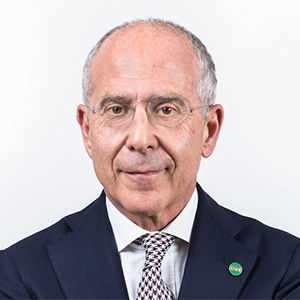
Francesco Starace, Partner, EQT Group
Synching energy and AI
At Enel, Starace drove the transformation from fossil-fuel energy producer to one of the world’s largest producers of renewables and digitized electricity grids. Today he supports other companies’ transition efforts, as chair of the Science Based Targets Initiative.
More than 11,000 companies have now joined SBTi to gain expert assessment of their decarbonization proposals. “It shows there is an understanding of the advantages of decarbonizing from an economic, a risk or a marketing standpoint, or just to be on a par with everybody else,” Starace says.
He is also a Partner at EQT Group, where he leads on investment in infrastructure, including energy projects to enable the growth of datacenters. As he points out, these are fields that traditionally work on different timescales.
“AI has a very short clock – its needs surface in months or years,” he says. “The energy field is used to thinking in decades.
“When you have these two different time zones, you can make mistakes – but if you are in synch, then it really flies.”
Jury is out on new nuclear tech
Starace trained in nuclear engineering, and is watching nuclear’s current renaissance with interest. But his view is that the technology exists in “a bit of a void”.
The remnants of the first phase of nuclear, built in the aftermath of the 1973 global oil shock, need to be maintained if possible, he says. But given the 20-year timescale to build plants of that kind, hope now rests with small modular reactor (“SMR”) technology.
Starace is open-minded about SMRs’ potential. “It is not obvious that they will fulfil the promise of becoming cheap and easy to manage,” he says. “I don’t think it’s unlikely – I think it’s possible. But we don’t have that clarity right now.”
Whether or not they meet their goals, innovation efforts in nuclear and other areas such as fusion energy will yield unexpected and useful technological discoveries, he predicts.
"It is not obvious that small modular reactors will fulfil the promise of becoming cheap and easy to manage."
Francesco Starace, Partner, EQT Group