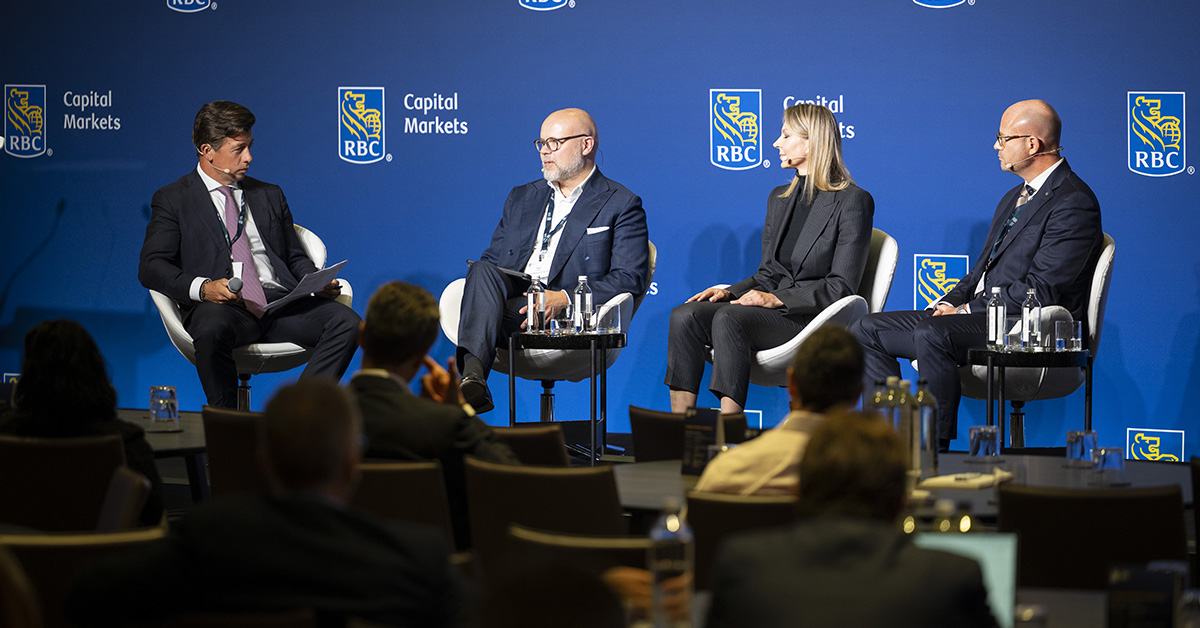


'Batteries for everything': value chain opportunities
Battery chain’s influence expands
The energy storage industry has hit maturity. After early hype ran up against a dip in electric vehicle demand, the rise of AI is driving a need for new battery applications and technologies.
André Burdet, Head of eMobility at Hitachi Energy, sees a race to perfect new battery technology, such as the move from wet to dry electrode processing, as well as the advance of Megawatt Charging System technology for commercial EVs.
He foresees diverse opportunities in the varied chemistry, technologies and packing required for different applications, with a move to mass-scale manufacturing of solid-state batteries.
“The entire industrial ecosystem is electrifying,” he says. “Instead of batteries for EVs, we now have batteries for everything.”
Matti Hietanen, CEO of Finnish Minerals Group, agrees: “It’s not only about the battery value chain any more. It’s about the energy transition as a whole, and it’s about defense, security, and geopolitics.”
“The entire industrial ecosystem is electrifying. Instead of batteries for EVs, we now have batteries for everything.”
André Burdet, Head of eMobility Business, Hitachi Energy
OEMs can support European build-out
For Hietanen, whose business is Europe’s only uranium producer, mining offers the most promising opportunities in the chain.
One recurring issue is the volatility of critical mineral pricing. Hietanen believes price floors, as proposed recently by the U.S., could help for certain minerals. “It’s very difficult to make long-term investment decisions if you’re hesitant on the payback,” he says.
Europe’s struggle to be competitive against China creates pressures. Hietanen believes Europe needs to continue to invest in building its own supply chain, while cooperating with China, as his company is doing through a joint venture to build a battery materials factory.
He calls on European OEMs to lead the way. “OEMs, like the European automotive industry, should send a clear signal that they value local supply chains, and that they are ready to offer offtakes and even financing,” he says.
“OEMs, like the European automotive industry, should send a clear signal that they value local supply chains and that they are ready to offer offtakes and even financing.”
Matti Hietanen, CEO, Finnish Minerals Group
Competition improves EV charging
At the EV charging end of the chain, Monique Rodrigues, Chief Financial Officer at Osprey Charging, sees promise in the mass adoption of EVs in the U.K. “Electric vehicles are here; there’s already 1.7 million electric vehicles on the road,” she says.
While home EV charging is already simple and effective, public charging is still developing. Competition is improving the offering, Rodrigues believes. She says a simple ratio of charge points to EVs does not provide a clear view of the market.
“You’ve got a mixture of different types of charging that suits different needs,” she says. “We’re seeing bigger sites with higher charging being offered, and better customer centricity that keeps improving.”
“We’re seeing bigger sites with higher charging being offered, and better customer centricity that keeps improving.”
Monique Rodrigues, CFO, Osprey Charging
Port investment offers opportunities
Companies in EV charging are equally excited about batteries’ potential, says Rodrigues.
“Batteries can be used to manage the grid where we don’t have enough grid capacity,” she says. “It can help us with our margin, providing return on investment and allowing us to pass that on to the customer, to bring down the cost of public charging.”
Looking ahead, Burdet is especially excited about the automation of ports, with their heavy transport and straddle carrier needs. “Typically in a port you’re going to end up with an energy demand of 50 to 100MW – data center level,” he says.
Another opportunity is resolving connection and energy trading issues for heavy vehicles operators. “With 100 electric trucks, they need to consume energy of 20 to 40MW/hour every day,” he says. “They need to move from being mobility operators to energy operators.”