

What lending environment are corporate borrowers facing?
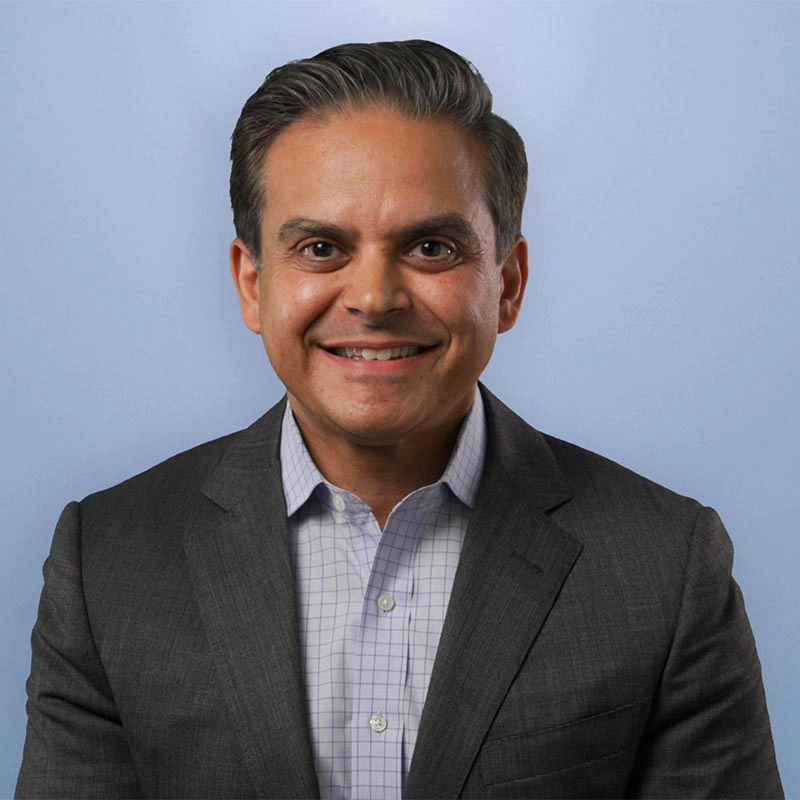
Raja Khanna: We're in an interesting moment where you'd think elevated rates and the broader macro backdrop would slow activity down. Instead, we're seeing more capital sources, more competition and more strategic choices for borrowers.
The dynamic varies significantly depending on borrower type. High-quality borrowers continue to have plenty of options and capital chasing them. Smaller, more leveraged companies are beginning to feel the pinch.
We're also seeing uncertainty translate into real financing needs. We recently worked with an automotive client that wanted a short-term working capital facility to build inventory ahead of potential supply chain disruptions. It shows how trade and tariff uncertainty can become a real financing need.
We're also seeing global companies rethink their supply chains, their working capital needs, counterparty exposure, and the timing of major investments. All of that requires capital.
What's interesting is how private credit has evolved. A few years ago, private credit providers were primarily focused on middle-market sponsor-backed transactions. Today they're moving into larger deals, joint ventures, project finance and data centers, which has changed how banks compete.
For high-quality corporate borrowers, competition remains intense. Every bank has a balance sheet and wants to grow, so spreads have compressed dramatically. The conversation has shifted from asking what's the best rate to “who actually understands my business and my long-term needs?"
"We're seeing more capital sources, more competition and more strategic choices for borrowers."
Raja Khanna, Head of U.S. Corporate Banking
What's driving capital deployment across the market?
Raja Khanna: We're on track for record debt capital markets issuance this year, and much of that is being driven by two powerful trends: the AI infrastructure buildout and continued M&A activity. Both have also pushed demand for bank loans and bridge facilities to record levels.
We're seeing a strong combination of traditional bridge-to-bond structures but increasingly paired with short-dated term loans that help demonstrate a deleveraging plan to investors and rating agencies.
On the refinancing front, regular way bond refinancings continue to be active. Companies are moving quickly when windows open up to term out near-term maturities.
The opportunity doesn't stop with the hyperscalers. Data center operators, infrastructure providers, and participants across the broader AI infrastructure ecosystem are driving increased activity in the high yield market, lower-rated credits, and equity issuance ahead of IPOs.
Vito Sperduto: There's certainly a lot of noise in the environment from a political perspective around hyperscalers and around the AI buildout. But we're seeing pressure on both sides of the aisle to come up with solutions, whether that's a stronger regulatory framework or greater clarity around what's being asked of these companies.
We believe the capital will be spent, creating demand for more innovative financing solutions. Addressing that need requires a broader approach, bringing together expertise across sustainability, municipal finance, and project finance to deliver the right outcomes for clients.
"We're on track for record debt capital markets issuance this year, driven largely by the AI infrastructure buildout and continued M&A activity."
Raja Khanna, Head of U.S. Corporate Banking
How is the role of treasury evolving?
Kartik Kaushik: Treasury is moving from a cost-center view to becoming an increasingly important part of strategic planning, capital allocation and transaction readiness. Two big vectors are driving that shift. The first is that the business models are evolving. In the past, treasury teams managed financial flows that were largely batch-driven, predictable, and time-based. But today, the business models have transformed into also accounting for commerce flows, which means the expectation is to do real-time micro and nano transactions.
The second big driver is scaling with efficiency. Leaner teams are being asked to manage more markets, more currencies, more counterparties and more regulatory environments and ecosystems. RBC Clear, our cloud-native, digital cash management platform, was built around some of these pain points and expectations.
For the client, the goal is always to have stronger control of their working capital. But for RBC the strategic rationale is broader. We get to service the client's entire continuum of needs, and RBC Clear deepens our U.S. corporate relationships, expands transaction banking capabilities, and helps create a stronger non-episodic connection between lending, deposits, payments, and treasury.
"Treasury is moving from a cost-center view to becoming an increasingly important part of strategic planning, capital allocation and transaction readiness."
Kartik Kaushik, Head of Global Transaction Banking - Product, Platforms and Solutions
Where are companies experiencing the greatest operational friction?
Kartik Kaushik: Our clients want transparency and control across their money movement, particularly for cross-border payments. They want to know where cash is, when it moves and, if there is a delay, why it happened.
As payments become more digital and automated, cybersecurity and fraud prevention are becoming increasingly critical. In this environment, the most valuable banks are those that can simplify the operating model while embedding stronger controls through real-time monitoring, dynamic risk management, predictive analytics, and proactive client service.
"Clients want transparency and control across their money movement. They want to know where their cash is, when it moves and if stuck or delayed, why."
Kartik Kaushik, Head of Global Transaction Banking - Product, Platforms and Solutions
What should finance leaders focus on over the next 12-18 months?
Raja Khanna: Although geopolitical headwinds are driving oil prices and rates higher, credit profiles remain strong. Companies have largely been able to pass through costs and preserve margins.
Our advice is to take advantage of opportunities to de-risk when they arise. Access to capital and financing costs can change quickly when conditions turn. While we don't see that happening in the next quarter or two, the current environment still argues for being proactive rather than reactive.
Kartik Kaushik: In a steady-state or potentially increasing interest rate environment, there is a greater need to deploy idle cash effectively. Companies are placing more focus on short-term yield opportunities while strengthening working capital controls, including closer management of payments and receivables. The goal is to keep cash productive rather than having it tied up unnecessarily. Of course, all of this necessitates real-time visibility into money movement.