

How has the funding landscape changed?
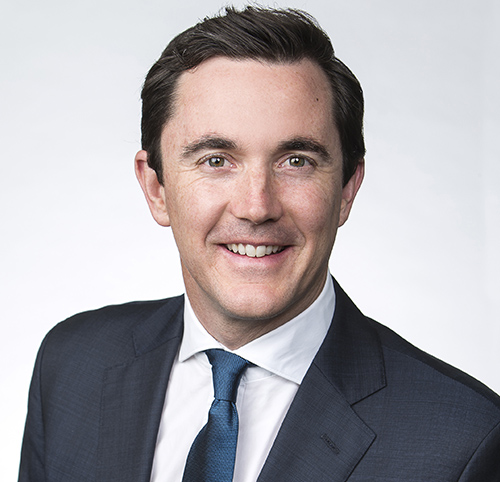
Rob Lamb: We started the year expecting rates to ease, but we've ended it in a higher-rate environment. Despite that, issuers haven't retreated. Global bond sales have reached all-time highs, with investment-grade financials and corporates raising around $5 trillion year to date, up around 20% on last year.
"We started the year expecting rates to ease, but we've ended it in a higher-rate environment. Despite that, issuers haven't retreated. Global bond sales have reached all-time highs, with investment-grade financials and corporates raising around $5 trillion year to date, up around 20% on last year."
Rob Lamb, Head of Debt Capital Markets, Europe, RBC Capital Markets
While AI and infrastructure financing have been major drivers, they account for only around half of the increase in supply. We've also seen robust M&A activity, healthy loan growth, and corporates refinancing roughly twice as much debt as they were 10 years ago.
Most accept there's a longer-term structural shift happening here and are becoming more strategic when it comes to accessing markets. There’s still plenty of risk in the system, with no guarantee on the trajectory of rates into 2027, which is why we’re seeing a healthy run rate of supply into year-end.
James Millar: The biggest change in technology has been the scale of hyperscaler supply. Tech accounts for well over $300 billion of issuance this year, with the number, size, and total volume of deals all increasing sharply.
"The biggest change in technology has been the scale of hyperscaler supply. Tech accounts for well over $300 billion of issuance this year, with the number, size, and total volume of deals all increasing sharply."
James Millar, Head of Technology, Media & Telecommunications, Debt Capital Markets, RBC Capital Markets
Will Oberrender: The industrials sector has benefited from the infrastructure and AI buildout, with issuance up 31% year on year in 2026. Rising CapEx requirements have played a role, but we've also seen a significant uptick in M&A activity, with investment-grade corporates looking to participate more directly in the AI and infrastructure buildout globally.
Healthcare remains more M&A-driven, with acquisition financing accounting for 62% of U.S. dollar healthcare supply year to date, a trend we expect to continue into 2027.
Can markets absorb growing financing needs?
Lamb: Conditions should remain supportive in the investment-grade market, although investors are becoming more discerning. We’re moving toward normalization, with strong issuance and resilient demand, but at a higher cost.
We’re already seeing greater credit differentiation and some spread widening. Average new-issue concessions rose from five to around 20 basis points for TMT issuers, and from three to around 10 for utilities.
Structural tailwinds remain strong. The hyperscalers are far from done, while the 10 largest European utilities have forward CapEx plans of around €430 billion, up 50%, much of which will need to be financed through the bond market.
If yields remain elevated and curves remain steep, issuance could become increasingly concentrated at shorter maturities, adding to capacity and crowding-out pressures. Already, around a third of euro issuance is five years or less, while just 15% is 10 years or more. In Europe, hyperscaler borrowing is also beginning to distort credit indices and drag other credit spreads wider.
Millar: In technology, the scale and unpredictability of future issuance is becoming increasingly important. As volumes grow, particularly in smaller markets, index concentration becomes a bigger consideration. That is putting more emphasis on first-mover advantage, with hyperscalers looking to get ahead of competing supply and issue where conditions are more attractive.
Oberrender: Industrials and healthcare have actually benefited from the increase in hyperscaler and utility supply. While credit spreads have drifted wider, movement has been relatively limited in those sectors, particularly among single-A borrowers.
Looking ahead, the key question is whether AA-rated hyperscaler borrowing begins to spill over into the broader corporate market. For now, spreads remain tight for industrial and healthcare borrowers, which continue to take a front-footed approach to refinancing and M&A financing.
Why are borrowers diversifying their funding globally?
Lamb: One of the biggest developments of the past decade has been the continued growth of Europe's debt markets, with greater depth, larger transactions, and a broader investor base. That's reflected in record-sized deals, including a recent €6 billion transaction from Schneider Electric and €4 billion deals from issuers including AT&T, Orange, Stellantis, SAP, and TenneT.
Persistent foreign investor inflows have added to that depth, helping make Europe an increasingly important source of capital for global borrowers.
Oberrender: That growing depth is giving borrowers more options to diversify globally. Reverse Yankee issuance now represents 28% of euro supply year to date and has surpassed €100 billion, while companies are increasingly looking across currencies to manage funding costs and reduce reliance on any single market.
"That growing depth is giving borrowers more options to diversify globally. Reverse Yankee issuance now represents 28% of euro supply year to date and has surpassed €100 billion, while companies are increasingly looking across currencies to manage funding costs and reduce reliance on any single market."
Will Oberrender, Head of Industrials & Healthcare, Debt Capital Markets, RBC Capital Markets
Millar:Technology companies are putting some of these markets on the map. This year we've seen the largest Canadian-dollar deal from Amazon, the largest Australian-dollar deal from Alphabet, as well as significant issuance in yen and Swiss francs. These markets are now offering billions of dollars of capacity and meaningful investor diversification.
How is AI changing capital markets financing?
Millar: AI is fundamentally changing the financing conversation for the largest technology companies. Businesses that have historically been highly cash generative are now facing significantly larger CapEx requirements and, in some cases, negative free cash flow as investment accelerates.
As a result, companies are turning to the capital markets and exploring funding options including chip financing, leasing, equipment finance, and asset-specific data-centre structures. Many are also looking at quarterly and annual issuance plans to make their CapEx funding journey more orderly.
Capacity is already becoming a constraint, with new-issue concessions on jumbo transactions rising from around 0-5 basis points to 15-20 in the U.S. market, and hyperscalers pushing the boundaries of capacity overseas.
If you're raising $100 billion a year, you start to look more like a super-sovereign or agency issuer than a traditional corporate borrower, so greater predictability around issuance could become increasingly important. The longer-term question is whether these funding requirements prove structural or become more self-financing as AI monetization develops.
How are infrastructure companies balancing funding and growth?
Oberrender: Strategic M&A remains a major driver of industrial financing, as companies invest to strengthen their position in the infrastructure buildout. At the same time, borrowers are paying close attention to ratings and debt capacity as they balance growth with ongoing funding needs.
We’re seeing companies refinance upcoming maturities and term out commercial paper to preserve capacity for organic and inorganic growth. Bridge facilities are also playing a greater role in M&A financing, giving borrowers additional flexibility while managing their capital structure.
How should issuers prepare for 2027?
Millar: Issuers should keep global markets on the radar, assess relative value across currencies, and maintain proactive investor engagement. Flexible issuance programs can also help companies move quickly when attractive windows emerge.
Lamb: Preparation will be critical. Issuers should develop balanced funding plans across currencies and lay the foundations for a nimble approach to execution. Few windows are likely to be perfect in 2027, making flexibility and funding efficiency increasingly important.
Robert McCormack: With more than 100 executives across its global Debt Capital Markets business, RBC brings together teams across Europe, North America, and Australia to provide clients with access to global bond markets.