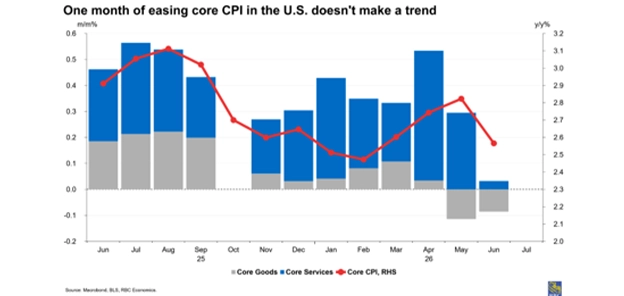
The June CPI report gave the Fed a welcome surprise, as both headline and core reported below expectations. Headline inflation declined -0.4% m/m, helped in large part by the drop in gas prices. More notable was the core inflation reading — at 0.0% m/m it was a welcome reprieve. Tariff pressures appear to have peaked in H1, and we did not end up seeing any pressures from FIFA as expected. Still, recent geopolitical events present upside risks to both headline and core inflation and importantly, there remains a notable gap between the y/y pace of PPI and CPI, meaning there is pressure in the pipeline.
It is too soon to declare victory on inflation even as we saw a retracement in June. Much of prior price pressures stem from external shocks — geopolitical, trade-related, and a structural AI buildout — and the situation remains extremely fluid with oil prices rising above post-MOU levels. Spending continues to be underpinned by high-income households and retired Baby Boomers, who are benefiting from non-labor income growth, even as lower-and-middle-income cohorts remain squeezed.
Read the full article — "US CPI: One month buys the Fed time but it doesn't buy a trend"