For generations, First Nations, Inuit and Métis people were systematically excluded from the sharing of wealth in Canada.
Today, many corporates are forging partnerships with Indigenous communities with the goal of “economic reconciliation”.
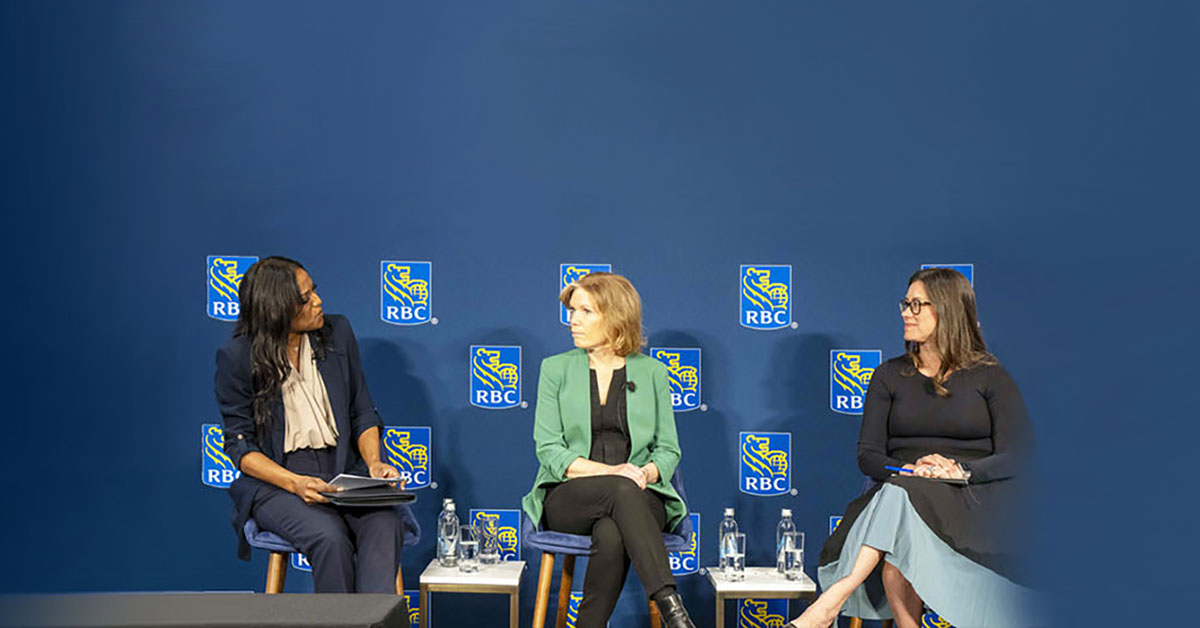
At RBC Capital Markets’ Sustainable Business Conference, Chinyere Eni, Head of RBC Origins, and member of Little Pine First nation, spoke with two organizations at the forefront of these efforts about how to achieve enduring results.
Corporate champions for change
While earlier programs have focused on ensuring equitable access to clean water, education and other rights, economic reconciliation goes beyond this.
The goal is to restore generational wealth to Indigenous people, explains Tabatha Bull, President and CEO of the Canadian Council for Aboriginal Business (CCAB).
She points out that until the 1950s, Canada’s Indian Act still prevented Indigenous people selling goods or services beyond their reserve without specific permission. Those who attended post-secondary education were obliged to give up Indigenous status, effectively abandoning their cultural identities.
“We all have a role to play to ensure we’re doing what we can to support Indigenous businesses and entrepreneurs,” Bull says.
But she acknowledges: “It’s a really long process. It’s taken us hundreds of years to get here, and it’s going to take us decades, centuries to get to where we need to be.”
Many companies are now responding to the Truth and Reconciliation Commission’s call to corporate Canada to advance this work.
For organizations embarking on reconciliation action plans, Bull emphasizes the importance of leadership support, but also identifying champions in every department.
“We have to ensure we’re not just putting reconciliation in the Indigenous relations team or the equity diversity team – it has to be across your whole organization,” she adds. The processes put in place need to endure long after those advocates have left.
“It’s taken us hundreds of years to get here, and it’s going to take us decades, centuries to get to where we need to be.”
Tabatha Bull, President & CEO, Canadian Council for Aboriginal Business
A $1bn wealth return plan
One company that is taking its reconciliation plan to a new level is Ontario Power Generation (OPG). Around 20 years ago it set out to repair relationships with Indigenous communities and take accountability for hydro schemes carried out without consultation on Indigenous lands, largely by its predecessor company, Ontario Hydro.
Having forged partnership agreements and made formal apologies to some communities, OPG has now set itself new goals. “We’ve made a commitment to return $1bn of economic wealth to Indigenous communities over the 10-year period to 2031,” says Heather Ferguson, the company’s Senior Vice President, Business Development & Corporate Affairs.
That type of switch requires a conscious change of policy to bring Indigenous businesses into supply chains.
“It’s human nature to continue to go back to the same person who you’ve worked with successfully before,” Bull says. “But if we’re really going to make an impact, we need to push ourselves to do something uncomfortable.”
OPG has made strides even in complex areas such as nuclear plant operation, says Ferguson: “We’ve actually gotten two Indigenous businesses qualified for the nuclear side of our business. So we need to keep doing that more and more.”
“We’ve made a commitment to return $1bn of economic wealth to Indigenous communities over 10 years.”
Heather Ferguson, Senior Vice President, Business Development & Corporate Affairs, Ontario Power Generation
Indigenous participants deliver better projects
It is now common for Indigenous communities to be 50% equity partners in major environmental projects. These schemes are most successful, Bull says, when they are built on pre-existing partnerships.
The benefits can extend beyond the life of the project: “If the community is a partner, we see that land being reclaimed to its original condition as closely as possible, versus the mining company leaving a pit in the community without being responsible for its restoration,” she says.
OPG is now trying to dovetail its reconciliation plan with its climate change objectives, says Ferguson, incorporating traditional knowledge gained from the input of local communities.
Recruitment targets prove most stretching
OPG’s target to employ Indigenous workers in all its offices has proved the most challenging, Ferguson admits.
This is also because the business set itself an ambitious target: “We really pushed ourselves,” she explains. “It’d be way worse to have a much lower metric, and then not have the benefit flowing to the community. We were trying to be very aggressive and credible at the same time.”
She says the next version of the company’s reconciliation plan will focus on ways to overcome the hurdles. It will also lay the foundations for the potential recruits’ success: “It’s one thing to hire Indigenous people, but it’s another to ensure that you set them up to be successful and to feel included.”