

How transport operators are tackling the decarbonisation challenge
Bus depots face electrification challenge
With 6,000 buses on its books, electrification was always going to be a long haul for UK-based FirstGroup. But a few years into the company’s decarbonisation journey, over a quarter of the fleet is electric.
Over that time, the picture on battery life has also become brighter. At first, battery warranties extended to just five to eight years for vehicles with a 16-year lifespan, says Ryan Mangold, the group’s Chief Financial Officer.
“Today we’ve got a bit more track record of exactly how battery degradation is playing out, and it’s possible to achieve 14-year warranties in the marketplace, if you include an insurance overlay,” he says.
A bigger challenge is electrification of some of the group’s 70 depots, to provide the overnight charge capacity needed. For a fifth of those sites, says Mangold, local networks simply don’t have sufficient power.
FirstGroup is now trialling a possible solution, in the form of bespoke battery energy storage from its partner, Palmer Energy.
“It could mitigate some of the size of the pipe we need to get sufficient energy into the depot when we need it,” says Mangold. “We use that as an opportunity for energy arbitrage as well, in terms of time-of-day charging.”
Airlines sign up to next-gen fuels
Meanwhile, the picture for decarbonisation of air transport is also evolving.
The industry has realized that electric- and hydrogen-powered commercial aircraft are unlikely to come into service before 2050, according to Jonathon Counsell, Group Head of Sustainability at IAG, which runs five European airlines.
That puts the focus firmly on sustainable aviation fuels (SAF). The first generation of these fuels is now a mature technology, produced in existing refineries, but its potential is limited.
“It’s probably going to serve our needs for the next 10 years, but it will cap out in terms of potential supply to somewhere between 30 and 50 million tons, because of limited feedstocks,” says Counsell.
Research is advancing on second-generation SAF, generated from household waste, and third-generation SAF, using CO2 captured from the atmosphere together with hydrogen. IAG has struck a 14-year deal with Infinium, a third-generation company in the U.S.
This was a “massive change” for IAG, requiring a lengthy governance process. But deals such as this are critical, says Counsell: “The key role that airlines can play in supporting the SAF market is a long-term off-take agreement.”
“The key role that airlines can play in supporting the SAF market is a long-term off-take agreement.”
Jonathon Counsell, Group Head of Sustainability, IAG
Giants acquire stakes in tech partners
Both companies are going beyond commercial arrangements with their tech partners, taking equity stakes in the businesses they hope will help enable future decarbonisation.
In 2025 FirstGroup invested in a minority stake in Palmer Energy. “We want to work with players active in this space,” says Mangold. “If we’re going to be part of the development sandpit, we’d like to have equity participation in the solutions we come up with.”
IAG has invested in Wastefront, a company that plans to turn waste tires into SAF, and Lanzajet, which is producing SAF from ethanol.
IAG is also part of the Oneworld BEF Fund, a wider collaboration of global airlines with Bill Gates’ Breakthrough Energy Ventures, to invest in novel SAF technologies.
“It’s an open fund that will attract financing from any airline, but also from the OEMs, airports, and investors outside the industry,” Counsell says. “We’re looking to help start-ups get through that pre-FID development phase.”
“If we’re going to be part of the development sandpit, we’d like to have equity participation in the solutions we come up with.”
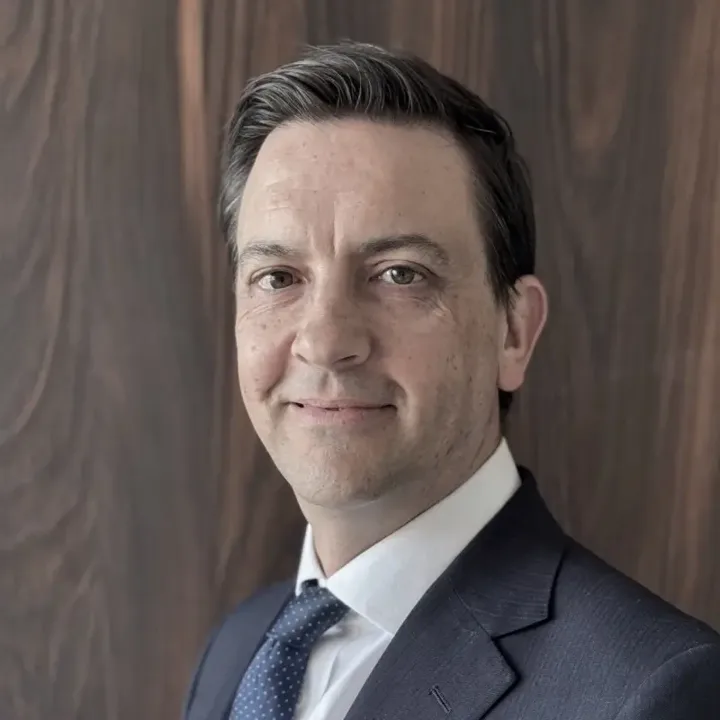
Ryan Mangold, Chief Financial Officer, FirstGroup
Hurdles to future decarbonisation
One challenge to global aviation progress is the lack of incentives for U.S. airlines to pursue SAF. However, the U.S. administration is supporting SAF production growth through agricultural feedstocks, says Counsell.
“While we’re seeing production come out of the U.S., there is no demand there, so a lot of that production is coming over to Europe to meet the demand through the mandates,” he says.
For FirstGroup, the biggest obstacle to future decarbonisation remains the build-out of infrastructure for the energy distribution required for electrification.
“The grid connectability and accessibility will make it a challenge for us to be able to do something at a sensible price,” says Mangold.