

Forward-thinking strategies built for success
Life science companies today face growing financial pressure in advancing new therapies—challenged by rising R&D costs and constrained budgets. Blackstone Life Sciences (BXLS) helps fill this gap, funding the innovation pipeline through a unique strategy that combines collaboration, ownership, and non-dilutive structures.
BXLS has carved out a distinct niche by partnering with leading pharma and biotech players to fund late-stage assets and advance clinical development, driving over US$10 billion in AUM and achieving a Phase III success rate of 85%, compared to the industry average of 48%. Its partners include Pfizer, Novartis, Takeda, Sanofi, Merck, Alnylam, and Moderna, among others.
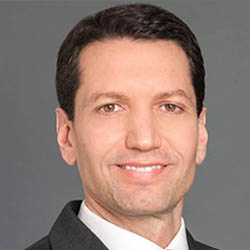
“We focus on providing market uncorrelated returns to our investors, through funding highly innovative products at the top biopharma and medtech companies worldwide,” says Panayiotopoulos.
“We focus on providing market uncorrelated returns to our investors, through funding highly innovative products at the top biopharma and medtech companies worldwide.”
Paris Panayiotopoulos, Senior Managing Director, BXLS
“Our collaboration strategy is geared to fund or co-fund the late-stage development of core franchise products owned by large established companies by assuming development risk and providing our deep R&D expertise and P&L relief,” says Panayiotopoulos. These partnerships often help advance programs that are strategically important but face internal budget or resource constraints.
While collaboration allows pharma and biotech companies to accelerate development of key assets, BXLS’s ownership strategy focuses on building new companies around high-potential programs that fall outside their strategic focus. These are typically assets that are being deprioritized or spun out, not due to lack of promise, but because they no longer align with the originating company’s core pipeline. BXLS identifies and acquires these clinical-stage assets with the goal of creating focused, standalone companies that can drive development forward. “We take a hands-on approach and aim for control equity positions.”
BXLS also employs a distinct strategy focused on acquiring commercial royalties and providing debt financing - primarily to biotech companies seeking non-dilutive capital solutions. Scale is a key differentiator, allowing BXLS to partner with high-quality counterparties on high-priority assets.
BXLS also employs a distinct strategy focused on acquiring commercial royalties and providing debt financing - primarily to biotech companies seeking non-dilutive capital solutions. Scale is a key differentiator, allowing BXLS to partner with high-quality counterparties on high-priority assets.
BXLS’ strategy in action
In its ownership strategy, BXLS applies deep scientific and operational expertise to scale high-potential assets—pairing seasoned executives with targeted R&D plans to maximize success. “We hire the best executives we can find in the industry, and work with our partners to develop R&D plans that increase the probability of success of our funded products,” says Panayiotopoulos.
A leading example is Anthos, a company built around Abelacimab, a therapy for stroke prevention in atrial fibrillation patients. Originally deprioritized at Novartis, the asset was advanced under BXLS ownership and ultimately reacquired by Novartis for up to US $3.1 billion—a “great outcome for BXLS, enabling a large pharma company like Novartis – where the asset originated from – to maximize its potential,” notes Panayiotopoulos.
An example of BXLS’s non-dilutive funding strategy is its 2020 US $2 billion investment in Alnylam, which included a 50% royalty interest in global sales of Novartis’s LEQVIO, a treatment for elevated LDL cholesterol. “Our investment was after LEQVIO had shown it could reduce LDL by around 50% with a twice-yearly dosage, but before it had been approved. This was the key risk we were underwriting,” he relays.
By providing capital without dilution, BXLS addresses a critical funding need in the market. Additionally, examples of the BXLS collaboration strategy, where BXLS funds the development of core, late-stage products, are many. Most recently this year, large deals with Pfizer and Takeda.
“We believe that the R&D annual funding gap between what pharma and medtech companies have to deploy, and what their pipeline needs, is significant,” says Panayiotopoulos.
“We believe that the R&D annual funding gap between what pharma and medtech companies have to deploy, and what their pipeline needs, is significant.”
Paris Panayiotopoulos, Senior Managing Director, BXLS
Pushing the boundaries in the golden age of medicine
Looking ahead, Panayiotopoulos sees targeted therapies as a key opportunity - a field rapidly advancing thanks to genomic and proteomic research. The growing sophistication of scientific tools is fundamentally transforming the life sciences landscape.
“This is a very innovative period in the history of medicine and device development,” he says. “In addition to exciting technologies, AI has the potential to transform the R&D process, improve productivity, and significantly increase the probability of success.”
Alongside breakthrough technology, strong leadership is crucial for success. “It’s about hiring and promoting people who are knowledgeable in their field, truly care about their business and patients, and have that sense of accountability and urgency to get important drugs to patients.”
While the future is hard to predict, biopharma innovation will likely be shaped by the convergence of digital transformation, precision medicine, and evolving approaches to R&D and commercialization. “From AI-powered models that design or predict the outcomes of clinical trials to accelerated regulatory pathways – companies that embrace these changes and foster collaboration across the whole ecosystem will be the best positioned to thrive in this dynamic landscape,” he concludes.